
Kiki Vos
Kiki Vos
Project Manager
Project Manager
China Digital Platforms for B2B Marketing: What European Companies Need to Know
China Digital Platforms for B2B Marketing: What European Companies Need to Know
China Digital Platforms for B2B Marketing: What European Companies Need to Know
Jun 5, 2026
For European B2B companies entering China, one of the first questions is: which digital platform should we invest in first?
The answer depends on the company’s China stage, sector, sales cycle, and commercial priority. China’s digital ecosystem is not an adaptation of the European one. It is a separate environment with different platforms, buyer habits, content formats, and communication expectations.
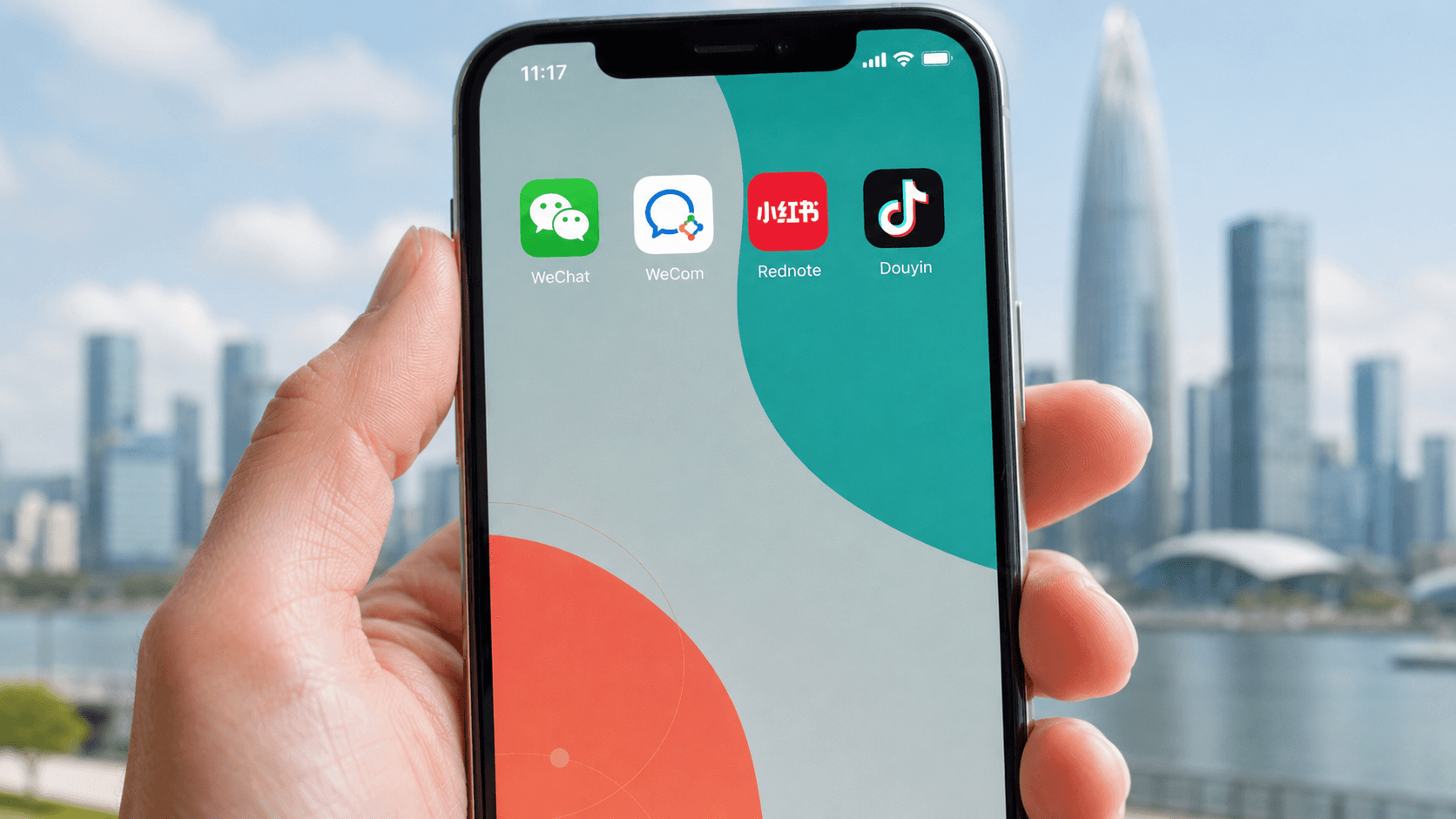
Teams based in Europe cannot simply translate their Google, LinkedIn, or website strategy into Mandarin and expect it to work. In China, B2B buyers use platforms such as WeChat, Baidu, Douyin, Rednote, Zhihu, sector media, trade events, and private business networks.
The key point is simple:
No single platform covers the full B2B funnel in China.
A strong China digital strategy uses the right platform for the right purpose.
How Chinese B2B Buyers Research Suppliers
Chinese B2B buyers often take time to evaluate foreign suppliers, especially when the brand is not yet familiar in China.
They may ask:
Is this company credible?
Does it understand the Chinese market?
Is Chinese-language information available?
Can I contact someone easily?
Is there local support or a local partner?
Are trusted sector voices discussing this company?
This means China B2B marketing is not only about visibility. It is also about trust.
For many European companies, the first challenge is not proving that the product is technically strong. The first challenge is proving that the company is serious, accessible, and credible in China.
The Main China Platforms for B2B Marketing
The most relevant platforms for many European B2B companies are WeChat, Baidu, Douyin, Rednote, and Zhihu. They are not interchangeable.
Platform | Primary B2B Function | Best Used For |
Relationship management and conversion | Official Account content, buyer communication, WeCom follow-up, Mini Programs | |
Baidu | Search and high-intent discovery | Capturing buyers actively searching for suppliers or solutions |
Douyin | Brand awareness and visual storytelling | Product demonstrations, trade show content, factory videos |
Rednote | Research and peer validation | Practical content, reviews, professional discovery in selected sectors |
Zhihu | Thought leadership and technical credibility | Expert answers, technical explanations, complex B2B topics |
What Each Platform Is Best For
WeChat is essential for B2B marketing in China, but it is strongest after a buyer has already become aware of the brand. A WeChat Official Account can publish Mandarin articles and support brand trust. WeCom supports direct communication and follow-up. Mini Programs can support product catalogues, inquiry forms, event registration, or gated content. WeChat is best for relationship-building and conversion, not cold discovery.
Baidu is relevant when buyers are actively searching for suppliers, product categories, technical information, or service providers. It can be useful for niche industrial, agri-tech, life sciences, or professional services offerings, but it should not automatically be the first recommendation for every company. Its relevance depends on search demand, category awareness, keyword competition, and whether Mandarin landing pages are ready.
Douyin can work for B2B companies with visual products or processes. Machinery, manufacturing, greenhouse technology, factory systems, and production environments can often be explained well through video. It is strongest when the company has something clear to show and a reason to build broader brand awareness.
Rednote is increasingly used for research in selected professional categories. For some B2B sectors, it can support brand discovery, practical explanations, peer-style content, and visual storytelling. It is most useful when the product or service can be explained through use cases, images, experience-based content, or short videos.
Zhihu is useful for complex products or services that require explanation. It is strongest for technical answers, expert content, and thought leadership. For life sciences, industrial technology, agri-tech, and professional services, Zhihu can help demonstrate expertise when target buyers actually use the platform for research.
Which Platform Should You Invest in First?
The best first platform is the one that solves the company’s most immediate China problem.
For many European companies, the first step is not a large advertising campaign. It is building a credible China-facing foundation: Mandarin positioning, a clear contact route, WeChat presence, and a follow-up process.
China Strategy Stage | Best First Investment | Why |
No China presence yet | Mandarin positioning, WeChat setup, China-facing landing page | Creates a credible foundation before campaigns |
Existing trade show or distributor contacts | WeChat Service Account and WeCom | Converts warm contacts into managed relationships |
Buyers actively search for the category | Baidu or search-led testing | Tests demand and captures existing intent |
Product is visual or demonstrable | Douyin, Rednote, or video-led content | Explains the product quickly through visuals |
Product is complex or technical | Zhihu, expert content, sector media, WeChat articles | Builds understanding and credibility |
Long enterprise sales cycle | WeChat, WeCom, content follow-up | Supports relationship management over time |
Main challenge is trust | Sector content, KOLs, thought leadership | Creates local credibility before sales outreach |
Operational Readiness Matters
A platform is only useful if the company can manage it properly.
Before launching, European companies should ask:
Do we have Mandarin content?
Can we respond to Chinese inquiries quickly?
Do we have a clear China-facing value proposition?
Is there a WeChat account, landing page, or contact route?
Who will manage comments, inquiries, and follow-up?
Is the sales team ready to handle Chinese leads?
Without these basics, platform activity can create visibility without conversion.
FAQ: China Digital Platforms for European B2B Companies
Which platform should a European B2B company start with in China?
If there are already warm contacts from trade shows, distributors, or partner conversations, WeChat and WeCom are often the most practical starting points. If buyers are actively searching for the category, search-led testing may also be relevant. If credibility is the main gap, expert content or sector media may matter more.
Does a European company need a Chinese entity to use Chinese digital platforms?
Not always. Some platforms can be accessed through a registered local partner or agency structure. Requirements vary by platform, account type, and advertising activity.
Is LinkedIn useful for B2B marketing in China?
LinkedIn is usually not a primary B2B marketing channel in China. Chinese business communication and supplier research more often happen through WeChat, local platforms, sector media, search, events, and private networks.
What Mandarin content is needed before launching?
At minimum, companies need a Chinese-language value proposition, product or service descriptions, and a clear inquiry route. For WeChat, regular Mandarin articles help build trust. For campaigns, localized landing pages or platform-native pages are often needed.
The Bottom Line
European B2B companies entering China should not try to be everywhere at once. The right platform choice depends on the company’s immediate challenge.
If the problem is lack of trust, start with credibility and content. If the problem is unmanaged warm contacts, start with WeChat and WeCom. If the problem is unknown demand, test search and buyer interest. If the product is visual, consider video or experience-led content.
NextportChina helps European B2B companies choose and manage the right China digital platforms based on sector, buyer behavior, and commercial priorities. The goal is not platform presence for its own sake, but a China-facing digital setup that supports real business development.
For European B2B companies entering China, one of the first questions is: which digital platform should we invest in first?
The answer depends on the company’s China stage, sector, sales cycle, and commercial priority. China’s digital ecosystem is not an adaptation of the European one. It is a separate environment with different platforms, buyer habits, content formats, and communication expectations.
Teams based in Europe cannot simply translate their Google, LinkedIn, or website strategy into Mandarin and expect it to work. In China, B2B buyers use platforms such as WeChat, Baidu, Douyin, Rednote, Zhihu, sector media, trade events, and private business networks.
The key point is simple:
No single platform covers the full B2B funnel in China.
A strong China digital strategy uses the right platform for the right purpose.
How Chinese B2B Buyers Research Suppliers
Chinese B2B buyers often take time to evaluate foreign suppliers, especially when the brand is not yet familiar in China.
They may ask:
Is this company credible?
Does it understand the Chinese market?
Is Chinese-language information available?
Can I contact someone easily?
Is there local support or a local partner?
Are trusted sector voices discussing this company?
This means China B2B marketing is not only about visibility. It is also about trust.
For many European companies, the first challenge is not proving that the product is technically strong. The first challenge is proving that the company is serious, accessible, and credible in China.
The Main China Platforms for B2B Marketing
The most relevant platforms for many European B2B companies are WeChat, Baidu, Douyin, Rednote, and Zhihu. They are not interchangeable.
Platform | Primary B2B Function | Best Used For |
Relationship management and conversion | Official Account content, buyer communication, WeCom follow-up, Mini Programs | |
Baidu | Search and high-intent discovery | Capturing buyers actively searching for suppliers or solutions |
Douyin | Brand awareness and visual storytelling | Product demonstrations, trade show content, factory videos |
Rednote | Research and peer validation | Practical content, reviews, professional discovery in selected sectors |
Zhihu | Thought leadership and technical credibility | Expert answers, technical explanations, complex B2B topics |
What Each Platform Is Best For
WeChat is essential for B2B marketing in China, but it is strongest after a buyer has already become aware of the brand. A WeChat Official Account can publish Mandarin articles and support brand trust. WeCom supports direct communication and follow-up. Mini Programs can support product catalogues, inquiry forms, event registration, or gated content. WeChat is best for relationship-building and conversion, not cold discovery.
Baidu is relevant when buyers are actively searching for suppliers, product categories, technical information, or service providers. It can be useful for niche industrial, agri-tech, life sciences, or professional services offerings, but it should not automatically be the first recommendation for every company. Its relevance depends on search demand, category awareness, keyword competition, and whether Mandarin landing pages are ready.
Douyin can work for B2B companies with visual products or processes. Machinery, manufacturing, greenhouse technology, factory systems, and production environments can often be explained well through video. It is strongest when the company has something clear to show and a reason to build broader brand awareness.
Rednote is increasingly used for research in selected professional categories. For some B2B sectors, it can support brand discovery, practical explanations, peer-style content, and visual storytelling. It is most useful when the product or service can be explained through use cases, images, experience-based content, or short videos.
Zhihu is useful for complex products or services that require explanation. It is strongest for technical answers, expert content, and thought leadership. For life sciences, industrial technology, agri-tech, and professional services, Zhihu can help demonstrate expertise when target buyers actually use the platform for research.
Which Platform Should You Invest in First?
The best first platform is the one that solves the company’s most immediate China problem.
For many European companies, the first step is not a large advertising campaign. It is building a credible China-facing foundation: Mandarin positioning, a clear contact route, WeChat presence, and a follow-up process.
China Strategy Stage | Best First Investment | Why |
No China presence yet | Mandarin positioning, WeChat setup, China-facing landing page | Creates a credible foundation before campaigns |
Existing trade show or distributor contacts | WeChat Service Account and WeCom | Converts warm contacts into managed relationships |
Buyers actively search for the category | Baidu or search-led testing | Tests demand and captures existing intent |
Product is visual or demonstrable | Douyin, Rednote, or video-led content | Explains the product quickly through visuals |
Product is complex or technical | Zhihu, expert content, sector media, WeChat articles | Builds understanding and credibility |
Long enterprise sales cycle | WeChat, WeCom, content follow-up | Supports relationship management over time |
Main challenge is trust | Sector content, KOLs, thought leadership | Creates local credibility before sales outreach |
Operational Readiness Matters
A platform is only useful if the company can manage it properly.
Before launching, European companies should ask:
Do we have Mandarin content?
Can we respond to Chinese inquiries quickly?
Do we have a clear China-facing value proposition?
Is there a WeChat account, landing page, or contact route?
Who will manage comments, inquiries, and follow-up?
Is the sales team ready to handle Chinese leads?
Without these basics, platform activity can create visibility without conversion.
FAQ: China Digital Platforms for European B2B Companies
Which platform should a European B2B company start with in China?
If there are already warm contacts from trade shows, distributors, or partner conversations, WeChat and WeCom are often the most practical starting points. If buyers are actively searching for the category, search-led testing may also be relevant. If credibility is the main gap, expert content or sector media may matter more.
Does a European company need a Chinese entity to use Chinese digital platforms?
Not always. Some platforms can be accessed through a registered local partner or agency structure. Requirements vary by platform, account type, and advertising activity.
Is LinkedIn useful for B2B marketing in China?
LinkedIn is usually not a primary B2B marketing channel in China. Chinese business communication and supplier research more often happen through WeChat, local platforms, sector media, search, events, and private networks.
What Mandarin content is needed before launching?
At minimum, companies need a Chinese-language value proposition, product or service descriptions, and a clear inquiry route. For WeChat, regular Mandarin articles help build trust. For campaigns, localized landing pages or platform-native pages are often needed.
The Bottom Line
European B2B companies entering China should not try to be everywhere at once. The right platform choice depends on the company’s immediate challenge.
If the problem is lack of trust, start with credibility and content. If the problem is unmanaged warm contacts, start with WeChat and WeCom. If the problem is unknown demand, test search and buyer interest. If the product is visual, consider video or experience-led content.
NextportChina helps European B2B companies choose and manage the right China digital platforms based on sector, buyer behavior, and commercial priorities. The goal is not platform presence for its own sake, but a China-facing digital setup that supports real business development.

