Lester Li
Lester Li
Marketing Manager
Marketing Manager
How China’s Digital Platforms Map to the B2B Buyer Journey
How China’s Digital Platforms Map to the B2B Buyer Journey
How China’s Digital Platforms Map to the B2B Buyer Journey
Jun 5, 2026
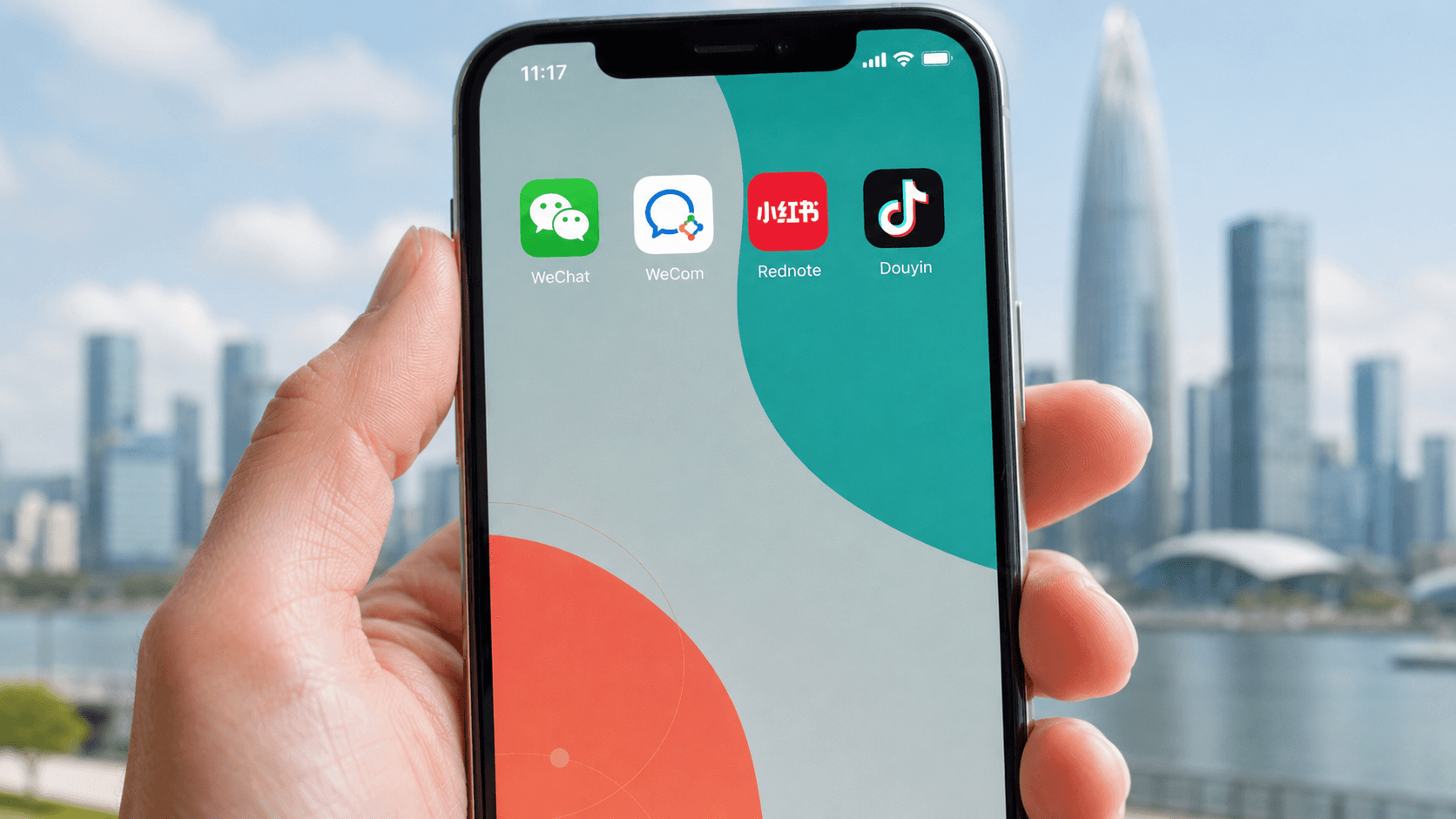
European B2B companies entering China often ask which platform matters most: WeChat, Baidu, Douyin, Rednote, or Zhihu.
The better question is: where does each platform fit in the buyer journey?
No single platform does everything. Each one supports a different stage of awareness, trust-building, relationship management, or conversion.
For China B2B marketing, this matters because using the wrong platform for the wrong goal usually leads to poor results.
The China B2B Funnel
Chinese B2B buyers often move through a long evaluation process. They may first discover a company through search, events, referrals, sector content, or social platforms. They then look for proof, compare suppliers, ask questions, and build trust before entering a serious sales conversation.
This journey is rarely linear, but the platform roles can be mapped clearly.
Funnel Stage | Primary Platforms | What They Do |
Discovery | Baidu, Zhihu, Rednote, Douyin | Help buyers first encounter the brand, product, or topic |
Consideration | Zhihu, Rednote, WeChat Official Account | Build trust through content, proof, technical depth, or peer-style validation |
Intent | WeChat, Mini Programs, landing pages | Give interested buyers more detail and a way to take action |
Conversion | WeCom, WeChat, sales follow-up | Support direct communication and relationship management |
Retention | WeChat, WeCom groups | Maintain long-term relationships, updates, referrals, and repeat business |
Discovery: Helping Buyers Find You
Discovery is the first challenge for many European B2B companies in China. Even if the company is known in Europe, Chinese buyers may not recognize the brand.
Discovery can happen through several channels.
Baidu can capture buyers who are actively searching. This works best when there is clear search demand for the product category or solution.
Rednote can support discovery in sectors where buyers look for practical, experience-based, visual, or peer-style content. It is useful when a product, service, event, or application can be explained through real examples, images, short videos, or market-entry stories.
Douyin can support discovery when the company has visual content that explains the product or brand quickly.
Zhihu can support discovery when buyers are researching technical questions or trying to understand complex topics.
The right discovery platform depends on how the buyer researches the category.
Consideration: Building Trust
Once buyers become aware of a company, they need reasons to trust it.
This is where content quality matters. Chinese buyers often want to see localized Mandarin content, sector knowledge, technical proof, practical examples, and signs that the company understands the Chinese market.
Platform | Consideration Role |
Rednote | Practical posts, peer-style validation, visual explanation, event or product impressions |
Zhihu | Technical explanations, expert answers, thought leadership |
WeChat Official Account | Deeper brand content, case-style articles, event follow-up |
Sector media | Credibility through third-party or industry-specific channels |
Douyin | Visual proof, product demonstrations, factory or process storytelling |
For B2B companies, consideration content should not be generic. It should answer real buyer questions: how the product works, where it is used, what problem it solves, why it is suitable for China, and what makes the company credible.
Intent: Giving Buyers a Next Step
Intent begins when a buyer wants more information or is ready to engage.
This is where WeChat becomes especially important. A WeChat Official Account can host deeper Mandarin content. A Mini Program can provide product catalogues, technical documents, inquiry forms, demo booking, or event registration.
The goal is to make the next step easy.
For European companies, this often means removing friction. Buyers should not have to search for an English contact form, send an email to a general inbox, or wait for a reply from Europe during the Chinese working day.
Conversion: Managing the Relationship
In China, conversion is closely linked to communication.
WeCom is often useful because it supports direct buyer conversations, document sharing, group communication, and follow-up during longer sales cycles.
This is especially relevant for companies without a full China sales team. A China-side partner can help manage the communication rhythm, respond during local business hours, and keep buyer interest warm.
Conversion is rarely the result of one post or one ad. It usually comes from repeated trust-building and responsive follow-up.
Retention: Keeping Relationships Active
After a first meeting, inquiry, distributor conversation, or project discussion, WeChat and WeCom can help keep the relationship active.
This can include:
Sharing new articles
Sending event invitations
Following up after trade shows
Updating distributors or partners
Answering technical questions
Creating WeCom groups for ongoing communication
For B2B companies, retention is important because China sales cycles can be long. A buyer who is not ready today may become relevant months later.
Common Platform Mistakes
Mistake | Why It Fails | Better Approach |
Using WeChat for cold discovery | WeChat is strongest after buyers already know the brand | Use WeChat for nurture, follow-up, and conversion |
Using Douyin for every B2B category | Not all products are visual or suited to short video | Use Douyin selectively for demonstrations and awareness |
Creating content without Mandarin localization | Translated content often feels distant or unclear | Use native Mandarin content with sector-specific vocabulary |
Measuring all platforms the same way | Each platform serves a different funnel role | Match KPIs to the platform’s function |
Trying to launch everywhere at once | Resources get spread too thin | Start with the platforms that fit the current China stage |
The Bottom Line
A strong China B2B digital strategy is not about being present on every platform. It is about using the right platform for the right stage of the buyer journey.
WeChat, Baidu, Douyin, Rednote, and Zhihu can all be useful, but they should not be treated as interchangeable.
For European B2B companies, the best platform mix depends on buyer behavior, sector complexity, sales cycle length, and the company’s current China presence.
The strongest strategies are usually built around a simple question:
What does the buyer need next, and which platform best supports that step?
For companies unsure how to answer that question, NextportChina can help translate China’s platform landscape into a practical strategy based on sector, buyer behavior, and commercial priorities.
European B2B companies entering China often ask which platform matters most: WeChat, Baidu, Douyin, Rednote, or Zhihu.
The better question is: where does each platform fit in the buyer journey?
No single platform does everything. Each one supports a different stage of awareness, trust-building, relationship management, or conversion.
For China B2B marketing, this matters because using the wrong platform for the wrong goal usually leads to poor results.
The China B2B Funnel
Chinese B2B buyers often move through a long evaluation process. They may first discover a company through search, events, referrals, sector content, or social platforms. They then look for proof, compare suppliers, ask questions, and build trust before entering a serious sales conversation.
This journey is rarely linear, but the platform roles can be mapped clearly.
Funnel Stage | Primary Platforms | What They Do |
Discovery | Baidu, Zhihu, Rednote, Douyin | Help buyers first encounter the brand, product, or topic |
Consideration | Zhihu, Rednote, WeChat Official Account | Build trust through content, proof, technical depth, or peer-style validation |
Intent | WeChat, Mini Programs, landing pages | Give interested buyers more detail and a way to take action |
Conversion | WeCom, WeChat, sales follow-up | Support direct communication and relationship management |
Retention | WeChat, WeCom groups | Maintain long-term relationships, updates, referrals, and repeat business |
Discovery: Helping Buyers Find You
Discovery is the first challenge for many European B2B companies in China. Even if the company is known in Europe, Chinese buyers may not recognize the brand.
Discovery can happen through several channels.
Baidu can capture buyers who are actively searching. This works best when there is clear search demand for the product category or solution.
Rednote can support discovery in sectors where buyers look for practical, experience-based, visual, or peer-style content. It is useful when a product, service, event, or application can be explained through real examples, images, short videos, or market-entry stories.
Douyin can support discovery when the company has visual content that explains the product or brand quickly.
Zhihu can support discovery when buyers are researching technical questions or trying to understand complex topics.
The right discovery platform depends on how the buyer researches the category.
Consideration: Building Trust
Once buyers become aware of a company, they need reasons to trust it.
This is where content quality matters. Chinese buyers often want to see localized Mandarin content, sector knowledge, technical proof, practical examples, and signs that the company understands the Chinese market.
Platform | Consideration Role |
Rednote | Practical posts, peer-style validation, visual explanation, event or product impressions |
Zhihu | Technical explanations, expert answers, thought leadership |
WeChat Official Account | Deeper brand content, case-style articles, event follow-up |
Sector media | Credibility through third-party or industry-specific channels |
Douyin | Visual proof, product demonstrations, factory or process storytelling |
For B2B companies, consideration content should not be generic. It should answer real buyer questions: how the product works, where it is used, what problem it solves, why it is suitable for China, and what makes the company credible.
Intent: Giving Buyers a Next Step
Intent begins when a buyer wants more information or is ready to engage.
This is where WeChat becomes especially important. A WeChat Official Account can host deeper Mandarin content. A Mini Program can provide product catalogues, technical documents, inquiry forms, demo booking, or event registration.
The goal is to make the next step easy.
For European companies, this often means removing friction. Buyers should not have to search for an English contact form, send an email to a general inbox, or wait for a reply from Europe during the Chinese working day.
Conversion: Managing the Relationship
In China, conversion is closely linked to communication.
WeCom is often useful because it supports direct buyer conversations, document sharing, group communication, and follow-up during longer sales cycles.
This is especially relevant for companies without a full China sales team. A China-side partner can help manage the communication rhythm, respond during local business hours, and keep buyer interest warm.
Conversion is rarely the result of one post or one ad. It usually comes from repeated trust-building and responsive follow-up.
Retention: Keeping Relationships Active
After a first meeting, inquiry, distributor conversation, or project discussion, WeChat and WeCom can help keep the relationship active.
This can include:
Sharing new articles
Sending event invitations
Following up after trade shows
Updating distributors or partners
Answering technical questions
Creating WeCom groups for ongoing communication
For B2B companies, retention is important because China sales cycles can be long. A buyer who is not ready today may become relevant months later.
Common Platform Mistakes
Mistake | Why It Fails | Better Approach |
Using WeChat for cold discovery | WeChat is strongest after buyers already know the brand | Use WeChat for nurture, follow-up, and conversion |
Using Douyin for every B2B category | Not all products are visual or suited to short video | Use Douyin selectively for demonstrations and awareness |
Creating content without Mandarin localization | Translated content often feels distant or unclear | Use native Mandarin content with sector-specific vocabulary |
Measuring all platforms the same way | Each platform serves a different funnel role | Match KPIs to the platform’s function |
Trying to launch everywhere at once | Resources get spread too thin | Start with the platforms that fit the current China stage |
The Bottom Line
A strong China B2B digital strategy is not about being present on every platform. It is about using the right platform for the right stage of the buyer journey.
WeChat, Baidu, Douyin, Rednote, and Zhihu can all be useful, but they should not be treated as interchangeable.
For European B2B companies, the best platform mix depends on buyer behavior, sector complexity, sales cycle length, and the company’s current China presence.
The strongest strategies are usually built around a simple question:
What does the buyer need next, and which platform best supports that step?
For companies unsure how to answer that question, NextportChina can help translate China’s platform landscape into a practical strategy based on sector, buyer behavior, and commercial priorities.