
Kiki Vos
Kiki Vos
Project Manager
Project Manager
WeChat Marketing Costs and Benchmarks for European B2B Companies
WeChat Marketing Costs and Benchmarks for European B2B Companies
WeChat Marketing Costs and Benchmarks for European B2B Companies
Jun 5, 2026
For European B2B companies entering China, WeChat is often one of the first platforms that comes up in a China marketing discussion. That makes sense. WeChat is where many Chinese business relationships are maintained, where buyers ask follow-up questions, and where long sales conversations often continue after an event, introduction, or first meeting.
But WeChat only works when expectations are realistic.
Many companies expect WeChat to generate quick follower growth and immediate leads. In reality, WeChat is usually not a fast acquisition channel. For industrial, agri-tech, life sciences, and professional services companies, it works best as a relationship, content, and conversion channel.
That means WeChat should be planned as part of a broader China market entry system, not as a standalone posting platform.
What Does WeChat Cost for a B2B Company?
The cost of WeChat marketing depends on the level of support required, the technical complexity of the content, and whether the company needs additional tools such as WeCom or a Mini Program.
For most European B2B companies, the main cost areas are:
1. WeChat Official Account Setup
A WeChat Official Account needs to be registered, verified, and configured correctly. For foreign companies, this process often requires local support, proper company documentation, and a clear decision on the right account type.
For most B2B companies, a Service Account is usually the best fit. It offers stronger visibility inside WeChat and better integration options for customer communication, lead handling, and future Mini Program development.
This setup stage is important because it creates the foundation for the company’s China-facing digital presence.
2. Mandarin Content Creation
Content is usually the most important ongoing investment.
For B2B companies, WeChat content should not be simple translation from English or Dutch into Mandarin. Chinese buyers expect content that feels locally written, technically accurate, and relevant to their market.
This is especially true for industrial equipment, agri-tech, life sciences, and professional services. A poorly translated article can damage credibility quickly. A strong Mandarin article, however, can help explain the company’s expertise, technology, market view, and value to Chinese buyers.
For many companies, a realistic starting point is two high-quality Mandarin articles per month. These can include:
Technical explainers
Application-focused articles
Event follow-up content
Market education pieces
Buyer FAQs
Case-style articles
Product or solution introductions written from the buyer’s perspective
Quality matters more than frequency. A useful, well-localized article is more valuable than several generic updates.
3. WeChat Account Management
A WeChat account needs consistent management. This includes formatting articles, publishing posts, monitoring engagement, handling basic inquiries, reviewing performance, and making sure the content calendar stays aligned with the company’s commercial priorities in China.
For European companies, this is where local understanding matters. The account should not feel like a European marketing channel translated into Chinese. It should feel like a professional China-facing communication channel.
This includes the right tone, terminology, visual style, publishing rhythm, and follow-up process.
4. WeCom Setup and Buyer Communication
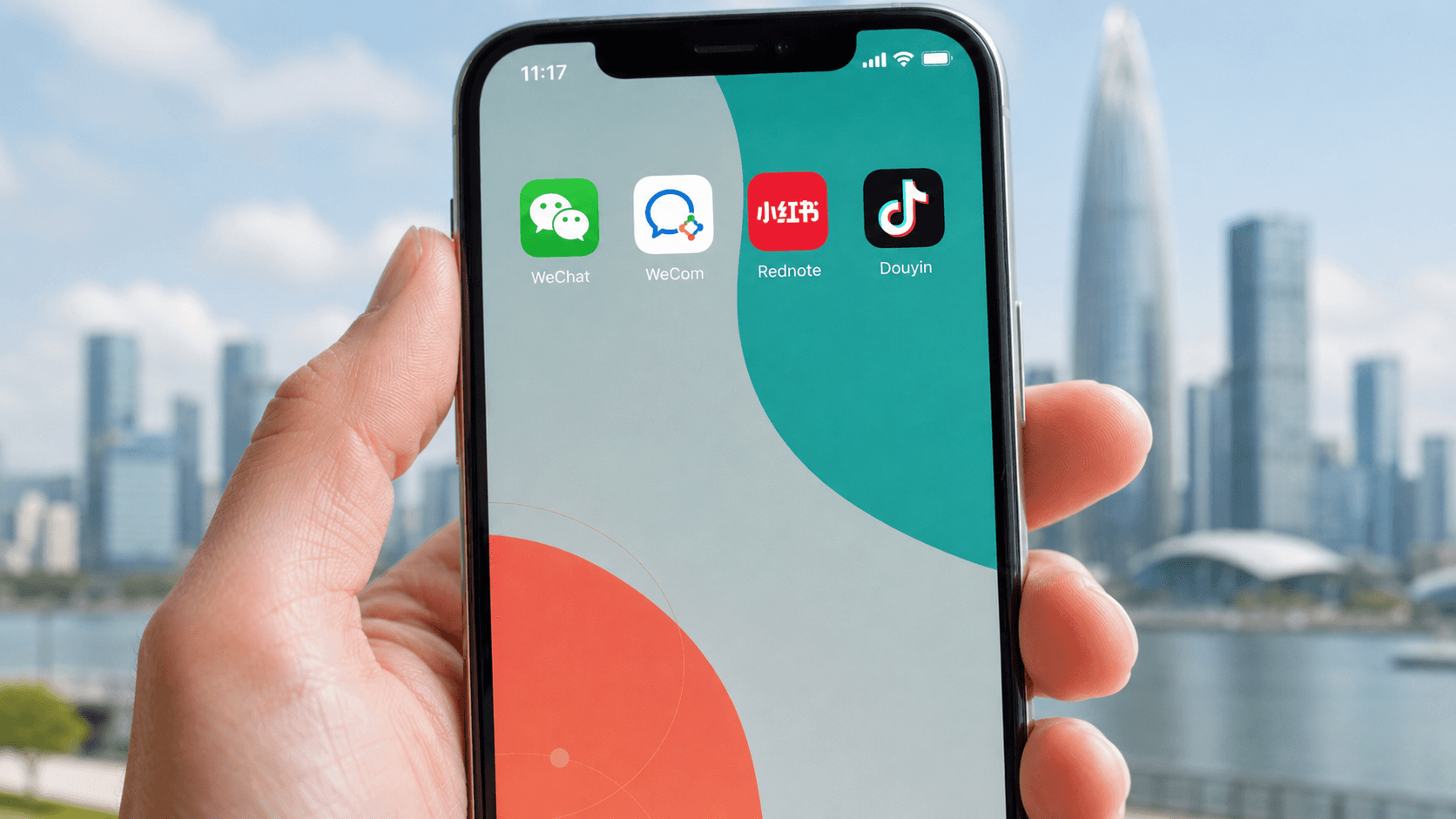
WeCom is an important part of B2B marketing and sales in China. While the WeChat Official Account is the public-facing content channel, WeCom is used for direct relationship management.
Chinese buyers often prefer fast, direct communication. Email can be too slow, especially in the early stages of a conversation. WeCom makes it easier to manage buyer inquiries, share documents, follow up after meetings, and support longer sales cycles.
For European companies, WeCom is especially useful when there is no full local sales team in China yet. A partner such as NextportChina can help bridge the time zone, language, and communication gap by supporting China-side follow-up.
5. Trade Show and Event Follow-Up
For many European B2B companies, trade shows, business delegations, and industry events are still some of the best ways to build a qualified Chinese network.
WeChat plays a central role in making these interactions last beyond the event.
A simple QR code at a booth or meeting can turn a short conversation into a long-term contact. After the event, companies can use WeChat and WeCom to share relevant content, answer questions, send product information, and keep the relationship warm.
This is often more valuable than trying to grow a large but unqualified follower base. For B2B companies, the quality of followers matters far more than the number.
6. Mini Program Development
A WeChat Mini Program can be useful once a company has a clearer China sales process and enough buyer interaction to justify it.
For B2B companies, useful Mini Program formats include:
Product catalogues
Inquiry forms
Event registration pages
Technical document libraries
Demo booking forms
Distributor or partner tools
A Mini Program should not always be the first step. In many cases, it makes more sense to start with a strong Official Account, Mandarin content, and WeCom process. Once buyer engagement increases, a Mini Program can help convert that engagement into structured leads.
Realistic First-Year Benchmarks
A WeChat program should usually be measured over 12 months, not 90 days.
In the first three months, the focus is often on setup, content rhythm, account positioning, and making sure the company has a professional China-facing presence.
From months four to six, the account should start supporting follow-up from meetings, trade shows, campaigns, introductions, and sales activity.
From months seven to twelve, the company should have a clearer view of which content topics, buyer segments, and follow-up methods are creating meaningful conversations.
Useful first-year indicators include:
Growth in relevant followers
Article open and read-through rates
Direct inquiries through WeChat or WeCom
Quality of buyer conversations
Follow-up activity after events or meetings
Downloads, demo requests, or form submissions
Sales conversations influenced by WeChat content
For B2B companies, the goal is not simply to grow follower numbers. A smaller audience of relevant procurement managers, engineers, distributors, researchers, or executives is more valuable than a large general audience.
Common WeChat Budget Mistakes
The first mistake is treating WeChat as a quick lead-generation tool. WeChat usually performs best as a trust-building and follow-up channel.
The second mistake is underinvesting in Mandarin content quality. Technical B2B buyers notice weak translation immediately.
The third mistake is setting up an Official Account without a clear follow-up process. If buyers read an article or scan a QR code but no one manages the next step, opportunities are easily lost.
The fourth mistake is building too much too soon. A Mini Program, campaign, or advanced integration only makes sense when the company has a clear use case and enough buyer activity to support it.
What WeChat Should Do for a European B2B Company
A strong WeChat setup should help a company:
Present itself professionally in China
Explain its expertise in Mandarin
Support trade show and meeting follow-up
Build trust with Chinese buyers
Enable direct communication through WeCom
Keep long sales cycles warm
Convert interest into structured inquiries
This is where WeChat becomes valuable. Not as a simple posting channel, but as part of the company’s China business development infrastructure.
FAQ: WeChat Marketing for European B2B Companies
How much does WeChat marketing cost for a European B2B company?
The cost depends on the level of support needed. Most companies should budget for WeChat Official Account setup, Mandarin content creation, account management, WeCom setup, and possibly Mini Program development later. The biggest ongoing investment is usually high-quality Mandarin content, especially for technical sectors such as industrial equipment, agri-tech, life sciences, and professional services.
Do European companies need a Chinese entity to open a WeChat Official Account?
No, however, the process can be time-consuming and confusing if you are unfamiliar with WeChat’s requirements, verification steps, and Chinese-language platform setup. Working with an agency or Chinese partner can help companies avoid delays, choose the right account structure, and make sure the account is set up correctly from the start. NextportChina supports European B2B companies with WeChat Official Account setup, verification guidance, Mandarin profile configuration, and the wider content and follow-up structure needed to make the account useful commercially.
What type of WeChat account is best for B2B companies?
For most European B2B companies, a WeChat Service Account is usually the best fit. It offers stronger visibility inside WeChat and better options for buyer communication, WeCom connection, CRM-style workflows, and Mini Program development. A Subscription Account is more suitable for media-style publishing, which is less relevant for most industrial and professional B2B brands.
How often should a B2B company post on WeChat?
For most B2B companies, two high-quality Mandarin articles per month is a realistic starting point. Publishing more often is not always better. A useful, well-localized technical article is usually more valuable than several short generic updates or translated company news posts.
What kind of WeChat content works best for industrial and B2B brands?
The strongest content usually helps Chinese buyers understand a technical, commercial, or regulatory topic. Examples include product application articles, technical explainers, buyer FAQs, event follow-ups, market education pieces, and case-style articles. Content should be written from the buyer’s perspective, not just from the company’s internal marketing agenda.
What is the difference between WeChat and WeCom?
WeChat Official Account is the public-facing content and brand channel. WeCom is the direct communication and relationship-management tool. For B2B companies, WeCom is often where follow-up conversations, document sharing, and buyer relationship management happen after the first interaction.
When should a company invest in a WeChat Mini Program?
A Mini Program is most useful once the company has a clear China sales process and enough buyer interaction to justify it. For many European B2B companies, it makes sense to first build the Official Account, publish strong Mandarin content, and set up WeCom follow-up. A Mini Program can then support product catalogues, inquiry forms, demo bookings, event registration, or technical document libraries.
How should European B2B companies measure WeChat success?
The most useful metrics are not only follower numbers. Companies should look at follower quality, article read-through rates, WeCom inquiries, event follow-up activity, demo requests, form submissions, and sales conversations influenced by WeChat. For B2B, a smaller group of relevant buyers is more valuable than a large audience with little commercial relevance.
How long does it take for WeChat to start working?
WeChat should usually be evaluated over a 12-month period rather than a short 90-day test. The first months are often about setup, positioning, content rhythm, and building a professional China-facing presence. Over time, WeChat becomes more valuable as it supports trade show follow-up, buyer communication, and longer sales cycles.
The Bottom Line
WeChat is important for European B2B companies entering China, but it should be used in the right way.
It is not mainly about posting more. It is about creating a credible China-facing presence, publishing localized content, supporting buyer communication, and making sure every interaction has a clear next step.
For companies in industrial sectors, agri-tech, life sciences, and professional services, WeChat works best when it is connected to real business activity: meetings, events, sales conversations, partner development, and long-term market building.
NextportChina supports European companies with this process, from WeChat account setup and Mandarin content creation to WeCom management, event follow-up, and Mini Program development. The goal is not just to be visible on WeChat, but to use WeChat as a practical tool for building trust and commercial relationships in China.
For European B2B companies entering China, WeChat is often one of the first platforms that comes up in a China marketing discussion. That makes sense. WeChat is where many Chinese business relationships are maintained, where buyers ask follow-up questions, and where long sales conversations often continue after an event, introduction, or first meeting.
But WeChat only works when expectations are realistic.
Many companies expect WeChat to generate quick follower growth and immediate leads. In reality, WeChat is usually not a fast acquisition channel. For industrial, agri-tech, life sciences, and professional services companies, it works best as a relationship, content, and conversion channel.
That means WeChat should be planned as part of a broader China market entry system, not as a standalone posting platform.
What Does WeChat Cost for a B2B Company?
The cost of WeChat marketing depends on the level of support required, the technical complexity of the content, and whether the company needs additional tools such as WeCom or a Mini Program.
For most European B2B companies, the main cost areas are:
1. WeChat Official Account Setup
A WeChat Official Account needs to be registered, verified, and configured correctly. For foreign companies, this process often requires local support, proper company documentation, and a clear decision on the right account type.
For most B2B companies, a Service Account is usually the best fit. It offers stronger visibility inside WeChat and better integration options for customer communication, lead handling, and future Mini Program development.
This setup stage is important because it creates the foundation for the company’s China-facing digital presence.
2. Mandarin Content Creation
Content is usually the most important ongoing investment.
For B2B companies, WeChat content should not be simple translation from English or Dutch into Mandarin. Chinese buyers expect content that feels locally written, technically accurate, and relevant to their market.
This is especially true for industrial equipment, agri-tech, life sciences, and professional services. A poorly translated article can damage credibility quickly. A strong Mandarin article, however, can help explain the company’s expertise, technology, market view, and value to Chinese buyers.
For many companies, a realistic starting point is two high-quality Mandarin articles per month. These can include:
Technical explainers
Application-focused articles
Event follow-up content
Market education pieces
Buyer FAQs
Case-style articles
Product or solution introductions written from the buyer’s perspective
Quality matters more than frequency. A useful, well-localized article is more valuable than several generic updates.
3. WeChat Account Management
A WeChat account needs consistent management. This includes formatting articles, publishing posts, monitoring engagement, handling basic inquiries, reviewing performance, and making sure the content calendar stays aligned with the company’s commercial priorities in China.
For European companies, this is where local understanding matters. The account should not feel like a European marketing channel translated into Chinese. It should feel like a professional China-facing communication channel.
This includes the right tone, terminology, visual style, publishing rhythm, and follow-up process.
4. WeCom Setup and Buyer Communication
WeCom is an important part of B2B marketing and sales in China. While the WeChat Official Account is the public-facing content channel, WeCom is used for direct relationship management.
Chinese buyers often prefer fast, direct communication. Email can be too slow, especially in the early stages of a conversation. WeCom makes it easier to manage buyer inquiries, share documents, follow up after meetings, and support longer sales cycles.
For European companies, WeCom is especially useful when there is no full local sales team in China yet. A partner such as NextportChina can help bridge the time zone, language, and communication gap by supporting China-side follow-up.
5. Trade Show and Event Follow-Up
For many European B2B companies, trade shows, business delegations, and industry events are still some of the best ways to build a qualified Chinese network.
WeChat plays a central role in making these interactions last beyond the event.
A simple QR code at a booth or meeting can turn a short conversation into a long-term contact. After the event, companies can use WeChat and WeCom to share relevant content, answer questions, send product information, and keep the relationship warm.
This is often more valuable than trying to grow a large but unqualified follower base. For B2B companies, the quality of followers matters far more than the number.
6. Mini Program Development
A WeChat Mini Program can be useful once a company has a clearer China sales process and enough buyer interaction to justify it.
For B2B companies, useful Mini Program formats include:
Product catalogues
Inquiry forms
Event registration pages
Technical document libraries
Demo booking forms
Distributor or partner tools
A Mini Program should not always be the first step. In many cases, it makes more sense to start with a strong Official Account, Mandarin content, and WeCom process. Once buyer engagement increases, a Mini Program can help convert that engagement into structured leads.
Realistic First-Year Benchmarks
A WeChat program should usually be measured over 12 months, not 90 days.
In the first three months, the focus is often on setup, content rhythm, account positioning, and making sure the company has a professional China-facing presence.
From months four to six, the account should start supporting follow-up from meetings, trade shows, campaigns, introductions, and sales activity.
From months seven to twelve, the company should have a clearer view of which content topics, buyer segments, and follow-up methods are creating meaningful conversations.
Useful first-year indicators include:
Growth in relevant followers
Article open and read-through rates
Direct inquiries through WeChat or WeCom
Quality of buyer conversations
Follow-up activity after events or meetings
Downloads, demo requests, or form submissions
Sales conversations influenced by WeChat content
For B2B companies, the goal is not simply to grow follower numbers. A smaller audience of relevant procurement managers, engineers, distributors, researchers, or executives is more valuable than a large general audience.
Common WeChat Budget Mistakes
The first mistake is treating WeChat as a quick lead-generation tool. WeChat usually performs best as a trust-building and follow-up channel.
The second mistake is underinvesting in Mandarin content quality. Technical B2B buyers notice weak translation immediately.
The third mistake is setting up an Official Account without a clear follow-up process. If buyers read an article or scan a QR code but no one manages the next step, opportunities are easily lost.
The fourth mistake is building too much too soon. A Mini Program, campaign, or advanced integration only makes sense when the company has a clear use case and enough buyer activity to support it.
What WeChat Should Do for a European B2B Company
A strong WeChat setup should help a company:
Present itself professionally in China
Explain its expertise in Mandarin
Support trade show and meeting follow-up
Build trust with Chinese buyers
Enable direct communication through WeCom
Keep long sales cycles warm
Convert interest into structured inquiries
This is where WeChat becomes valuable. Not as a simple posting channel, but as part of the company’s China business development infrastructure.
FAQ: WeChat Marketing for European B2B Companies
How much does WeChat marketing cost for a European B2B company?
The cost depends on the level of support needed. Most companies should budget for WeChat Official Account setup, Mandarin content creation, account management, WeCom setup, and possibly Mini Program development later. The biggest ongoing investment is usually high-quality Mandarin content, especially for technical sectors such as industrial equipment, agri-tech, life sciences, and professional services.
Do European companies need a Chinese entity to open a WeChat Official Account?
No, however, the process can be time-consuming and confusing if you are unfamiliar with WeChat’s requirements, verification steps, and Chinese-language platform setup. Working with an agency or Chinese partner can help companies avoid delays, choose the right account structure, and make sure the account is set up correctly from the start. NextportChina supports European B2B companies with WeChat Official Account setup, verification guidance, Mandarin profile configuration, and the wider content and follow-up structure needed to make the account useful commercially.
What type of WeChat account is best for B2B companies?
For most European B2B companies, a WeChat Service Account is usually the best fit. It offers stronger visibility inside WeChat and better options for buyer communication, WeCom connection, CRM-style workflows, and Mini Program development. A Subscription Account is more suitable for media-style publishing, which is less relevant for most industrial and professional B2B brands.
How often should a B2B company post on WeChat?
For most B2B companies, two high-quality Mandarin articles per month is a realistic starting point. Publishing more often is not always better. A useful, well-localized technical article is usually more valuable than several short generic updates or translated company news posts.
What kind of WeChat content works best for industrial and B2B brands?
The strongest content usually helps Chinese buyers understand a technical, commercial, or regulatory topic. Examples include product application articles, technical explainers, buyer FAQs, event follow-ups, market education pieces, and case-style articles. Content should be written from the buyer’s perspective, not just from the company’s internal marketing agenda.
What is the difference between WeChat and WeCom?
WeChat Official Account is the public-facing content and brand channel. WeCom is the direct communication and relationship-management tool. For B2B companies, WeCom is often where follow-up conversations, document sharing, and buyer relationship management happen after the first interaction.
When should a company invest in a WeChat Mini Program?
A Mini Program is most useful once the company has a clear China sales process and enough buyer interaction to justify it. For many European B2B companies, it makes sense to first build the Official Account, publish strong Mandarin content, and set up WeCom follow-up. A Mini Program can then support product catalogues, inquiry forms, demo bookings, event registration, or technical document libraries.
How should European B2B companies measure WeChat success?
The most useful metrics are not only follower numbers. Companies should look at follower quality, article read-through rates, WeCom inquiries, event follow-up activity, demo requests, form submissions, and sales conversations influenced by WeChat. For B2B, a smaller group of relevant buyers is more valuable than a large audience with little commercial relevance.
How long does it take for WeChat to start working?
WeChat should usually be evaluated over a 12-month period rather than a short 90-day test. The first months are often about setup, positioning, content rhythm, and building a professional China-facing presence. Over time, WeChat becomes more valuable as it supports trade show follow-up, buyer communication, and longer sales cycles.
The Bottom Line
WeChat is important for European B2B companies entering China, but it should be used in the right way.
It is not mainly about posting more. It is about creating a credible China-facing presence, publishing localized content, supporting buyer communication, and making sure every interaction has a clear next step.
For companies in industrial sectors, agri-tech, life sciences, and professional services, WeChat works best when it is connected to real business activity: meetings, events, sales conversations, partner development, and long-term market building.
NextportChina supports European companies with this process, from WeChat account setup and Mandarin content creation to WeCom management, event follow-up, and Mini Program development. The goal is not just to be visible on WeChat, but to use WeChat as a practical tool for building trust and commercial relationships in China.