
Lester Li
Lester Li
Marketing Manager
Marketing Manager
China Content Localisation for B2B: Why Translation Is Not Enough
China Content Localisation for B2B: Why Translation Is Not Enough
China Content Localisation for B2B: Why Translation Is Not Enough
Jun 5, 2026
This guide covers what genuine localization requires for companies based in Europe, why the distinction between translation and localization is commercially significant, and how to build a content process that protects your brand standards while producing Mandarin content that Chinese B2B buyers actually read.
Key Takeaways
Translation is not enough for China B2B marketing. Directly translated content may be accurate, but it often fails to match Chinese buyer expectations, platform formats, and trust signals.
China content localisation is about credibility, not just language. Mandarin content must reflect local terminology, buyer psychology, platform behaviour, and China-specific proof points.
Chinese B2B buyers evaluate different trust signals. Local case studies, active WeChat presence, Baidu visibility, Zhihu expertise, peer validation, and after-sales support matter more than generic global claims.
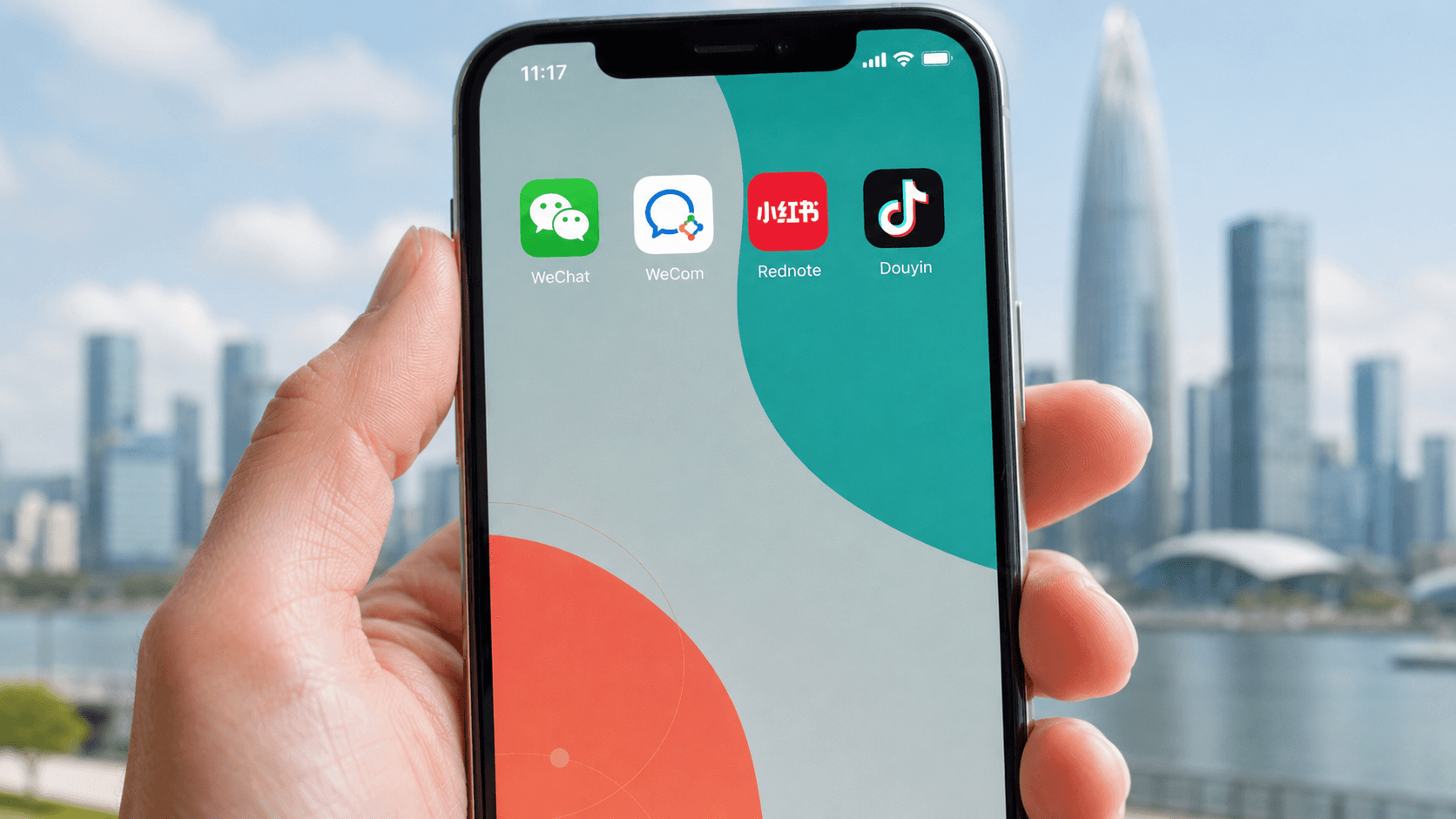
Each Chinese platform requires a different content format. WeChat articles, Baidu landing pages, Zhihu answers, and Douyin scripts all need platform-native structure, not copied European web content.
Regulatory and technical claims must be adapted for China. CE, REACH, FDA, or EU-focused claims often need to be reframed around Chinese standards, including NMPA, GB standards, or CCC where relevant.
Sector expertise matters in Mandarin content. Industrial, agri-tech, life sciences, and professional services content requires native Mandarin writing plus sector-specific terminology.
HQ needs a localisation process, not ad hoc translation. A China localisation brief, dual-language review process, approval rules, and regular content audits help maintain brand standards without slowing execution.
Full localisation costs more than translation, but performs better. It improves trust, platform performance, search visibility, and buyer engagement because the content feels credible to Chinese B2B audiences.
Why Translation Fails in China B2B Marketing
Translation produces technically accurate Mandarin. That is not the same as content that works. The gap between the two is where most China marketing programs for companies based in Europe quietly break down.
According to research from PLTFRM's 2025 China B2B Content Frameworks report, Chinese B2B buyers ignore 92% of overseas marketing materials because the content feels too foreign, too shallow, or too promotional. The 8% that breaks through follows specific content frameworks built around Chinese reading habits, trust signals, and cultural expectations that direct translation cannot replicate.
The Four Reasons Translation Consistently Underperforms
Trust Signals Are Different for Chinese B2B Buyers
In European B2B marketing, credibility comes from analyst rankings, award logos, global client lists, and case studies from recognizable international brands. In China, these signals carry significantly less weight. Chinese B2B buyers are more influenced by local case studies, industry-specific technical depth, evidence of genuine market commitment, and peer validation from Chinese professionals they recognize. A translated case study featuring a German automotive manufacturer means almost nothing to a procurement manager in Guangdong. A case study featuring a Chinese industrial partner they know means everything.
Chinese B2B Content Requires a Different Communication Style
European B2B content tends to lead with product features, performance specifications, and competitive differentiation. Chinese B2B content is expected to lead with the buyer's problem, demonstrate understanding of their specific context, and build toward the solution gradually. Direct selling language reads as aggressive and untrustworthy in Chinese professional culture. The relationship-first communication style that Chinese buyers expect is not a stylistic preference. It is a structural requirement of the content.
Chinese Platforms Have Their Own Content Rules
WeChat articles have specific formatting requirements: short paragraphs, bold subheadings, embedded images at regular intervals, and a mobile-first layout. Baidu landing pages require keyword density, meta structure, and content hierarchy that differs significantly from European web standards. Zhihu answers follow a specific structure (problem statement, data, analysis, recommendation) that the platform's algorithm rewards. A translated piece of content dropped into any of these platforms without format adaptation performs poorly regardless of how accurate the Mandarin is.
Regulatory Claims Must Be Rewritten for China
For companies in life sciences, agri-tech, and industrial sectors, product claims, safety specifications, and regulatory references must comply with Chinese standards, not European ones. A translated CE certification claim is not a valid Chinese market claim. A translated REACH compliance statement does not map to China's GB standards. Using translated compliance language in Chinese-market content creates legal risk and signals to buyers that the company does not understand the local market.
Translation vs Localisation for China B2B Content
Genuine localization operates across four distinct dimensions. Translation addresses only one of them: language. The other three are where the commercial impact is made.
Dimension | What Translation Does | What Localization Does |
Language | Converts words from source to target language | Adapts vocabulary, register, and terminology to Chinese B2B professional standards |
Cultural framing | Preserves European communication logic | Restructures content around Chinese buyer psychology and trust-building expectations |
Platform format | Produces text that can be pasted into any platform | Adapts structure, layout, and content type to each platform's specific conventions |
Regulatory and technical | Translates existing claims and certifications | Rewrites claims to comply with Chinese standards and resonate with Chinese buyer evaluation criteria |
Language Adaptation Beyond Word-for-Word Accuracy
Professional Mandarin for B2B content is not the same as conversational Mandarin. Chinese B2B buyers in industrial, life sciences, and agri-tech sectors use specific technical terminology that differs significantly from general Mandarin. A native Mandarin speaker without sector expertise will produce content that reads as generic. A native Mandarin speaker with industrial or life sciences sector knowledge will produce content that reads as credible and authoritative.
The distinction matters most in three areas:
Product naming and technical specifications: Chinese buyers search for products using Chinese-market terminology, which often differs from the direct Mandarin translation of the European product name. A precision agriculture sensor marketed in Europe as a "soil moisture monitoring system" may be searched for in China using entirely different terminology that reflects local agricultural practice.
Company and brand name adaptation: Chinese brand names are not transliterations. They are phonetically and semantically adapted names that carry meaning in Mandarin. A company that uses a direct transliteration of its European name in China is missing an opportunity to create a name that resonates culturally and is easy for Chinese buyers to remember and share.
Industry-specific credibility signals: Each sector has specific Mandarin terminology that signals expertise. Using the correct terms for life sciences regulatory frameworks, industrial safety standards, or agri-tech certification bodies tells Chinese buyers that the company understands their world.
Cultural Framing for Chinese B2B Buyers
The structural difference between European and Chinese B2B content is significant enough to require a complete rewrite of most marketing materials, not a translation.
European B2B content structure:
Product or service introduction
Features and specifications
Competitive differentiation
Call to action
Chinese B2B content structure that performs:
Buyer's problem or industry challenge (stated in their language)
Market context and data (demonstrating understanding of their situation)
Solution approach (positioned as a partnership, not a transaction)
Evidence (local case studies, technical validation, peer references)
Next step (relationship-building invitation, not a sales close)
This structural difference is not cosmetic. It reflects a fundamental difference in how Chinese B2B buyers evaluate trust. The relationship-first communication style that Chinese business culture expects means that content which leads with product features and competitive claims reads as pushy and untrustworthy. Content that leads with demonstrated understanding of the buyer's situation reads as credible and worth engaging with.
Platform-Native Content for WeChat, Baidu, Zhihu and Douyin
Each Chinese platform has specific content conventions that are understood by Chinese buyers and rewarded by platform algorithms. Content that ignores these conventions underperforms regardless of how good the Mandarin is.
Platform | Content Format Requirements | Common Mistakes from Translated Content |
WeChat OA | Short paragraphs (2-3 sentences), bold subheadings every 150-200 characters, embedded images every 400-500 characters, mobile-optimized layout | Long paragraphs from European web copy, image-light format, desktop-oriented layout |
Baidu | Keyword-rich headings, structured data markup, Chinese-language meta descriptions, Jimuyu landing page format for ads | European SEO structure, English keywords in meta, non-mobile-optimized pages |
Zhihu | Problem-first structure, data citations, expert tone, 800-2,000 character answers for high engagement | Promotional tone, feature-led structure, insufficient technical depth |
Douyin | 15-60 second format, Chinese subtitle standards, platform-specific aspect ratios, trending audio | European video production formats, no subtitles, wrong aspect ratio |
Regulatory and Technical Adaptation for China
For companies in regulated sectors, this dimension is the most commercially critical and the most commonly overlooked.
Life sciences: Product claims must reference NMPA (National Medical Products Administration) standards, not CE marking or FDA approval. Clinical data from European trials needs contextual framing that explains its relevance to Chinese regulatory requirements. Promotional content for pharmaceutical and medical device products must comply with China's Advertising Law, which has specific restrictions on superlatives, efficacy claims, and comparative advertising.
Agri-tech: Pesticide and fertilizer products require China GB standard references. Seed technology claims must align with China's Plant Variety Protection framework. Environmental claims need to reference Chinese agricultural sustainability standards rather than EU Green Deal frameworks.
Industrial: CE marking is not recognized in China. Products entering the Chinese market need CCC (China Compulsory Certification) references where applicable. Safety specifications must reference GB standards. Export control and dual-use technology claims require careful adaptation to avoid triggering Chinese regulatory review.
Platform-Native Content Requirements in China
The localization requirements differ significantly across the sectors that NextportChina works with. Here is what each sector needs to get right.
Industrial and Manufacturing
Chinese procurement managers in industrial sectors evaluate foreign suppliers on three primary dimensions: technical capability, after-sales support reliability, and evidence of genuine China market commitment. European industrial companies often produce content that demonstrates technical capability clearly but fails on the other two dimensions.
What to localize specifically:
Case studies featuring Chinese manufacturing environments, not European ones
After-sales support content in Mandarin that explains response times, spare parts availability in China, and local service network coverage
Technical documentation adapted to Chinese GB standards and measurement conventions
Trade show content that references Chinese industry events (Hannover Messe China, CIIF, Chinaplas) alongside European ones
The credibility signal most industrial companies miss: Chinese procurement managers check whether a foreign supplier has a WeChat Official Account before initiating contact. An industrial company without a professionally maintained WeChat OA is interpreted as not being serious about the Chinese market. The content quality of that OA is the first localization test a buyer applies.
Agri-Tech
China's agricultural sector is undergoing a significant modernization push, with substantial government investment in precision agriculture, greenhouse technology, and sustainable farming inputs. European agri-tech companies with relevant technology have genuine market opportunity, but the localization requirements are among the most demanding of any sector.
What to localize specifically:
Product performance data referenced to Chinese agricultural conditions (soil types, climate zones, crop varieties) rather than European ones
Regulatory pathway content explaining how European-certified products enter the Chinese market and what approvals are required
Content that acknowledges Chinese agricultural policy priorities (food security, rural revitalization, carbon neutrality targets) and positions the product within them
Partnership and distribution content in Mandarin that addresses the relationship expectations of Chinese agricultural distributors
The trust signal agri-tech companies consistently miss: Chinese agricultural buyers want to see that a foreign technology works in Chinese conditions, not just European ones. Field trial data from Chinese partner farms, even at small scale, outperforms comprehensive European certification documentation in building buyer confidence.
Life Sciences
Life sciences localization is the most regulated and the most consequential. A mistranslated product claim or an incorrectly adapted regulatory reference can create legal liability, not just a poor buyer impression.
What to localize specifically:
All product claims reviewed against NMPA requirements before publication
Clinical and efficacy data framed within the context of Chinese regulatory standards
KOL (Key Opinion Leader) content strategy built around Chinese medical and research communities, not European thought leaders
Patient and professional communication adapted to Chinese healthcare communication norms
The structural challenge for life sciences companies: The approval process for promotional content in China's life sciences sector involves multiple review layers that European companies are not accustomed to. Building a localization workflow that incorporates regulatory review without creating content bottlenecks is one of the most common operational challenges NextportChina's life sciences clients face.
Professional Services
Professional services localization is less about regulatory compliance and more about cultural positioning. Chinese buyers of professional services (consulting, legal, financial, engineering) evaluate foreign providers primarily on credibility signals that are specific to Chinese professional culture.
What to localize specifically:
Credentials and qualifications adapted to explain their Chinese-market equivalents
Case studies featuring Chinese client names and Chinese business contexts where possible
Thought leadership content that demonstrates understanding of Chinese market dynamics, not just global best practice
Team bios that highlight any China experience, Mandarin capability, or Chinese professional network connections
The positioning mistake professional services firms make: European professional services firms often lead with their global brand and international client roster. In China, this reads as generic. The firms that win are the ones whose content demonstrates specific, current knowledge of Chinese market conditions in the buyer's sector.
How to Build a China Content Localisation Process
The tension most Global Marketing Managers face is real: Chinese content needs to be adapted enough to work in the local market, but controlled enough that HQ can maintain brand consistency and legal compliance. Building a localization process that resolves this tension requires three structural elements.
Create a Localisation Brief for China
Before any content is produced, HQ and the China team need a written agreement on the boundaries of adaptation. This document is distinct from a brand guideline. It is a China-specific localization brief that defines:
Non-negotiable elements (cannot be changed without HQ approval):
Core value proposition and brand positioning statement
Product performance claims and technical specifications
Legal disclaimers and regulatory language
Logo usage, color palette, and visual identity standards
Pricing references and commercial terms
Adaptable elements (China team can adapt without individual sign-off):
Content structure and narrative flow (to match Chinese buyer expectations)
Visual layout and formatting (to match platform conventions)
Tone and register (to match Chinese professional communication norms)
Supporting examples and case studies (to use China-relevant references)
Platform-specific content types (WeChat articles, Zhihu answers, Douyin scripts)
Fast-track approval elements (require 48-hour HQ sign-off):
New product category content
Competitive claims or market positioning statements
Content referencing regulatory approvals or certifications
Any content that will be amplified through paid media
This three-tier structure gives the China team the operational speed they need for the majority of content production while maintaining genuine HQ oversight for the content that carries brand or legal risk.
Define What HQ Must Approve
HQ brand managers cannot review Mandarin content directly in most cases. The review process needs to be structured so that meaningful oversight is possible without requiring Mandarin fluency.
A practical dual-language review process:
China team produces Mandarin content with a structured English summary (key claims, tone, platform, audience, call to action)
HQ brand manager reviews the English summary against the localization brief
Any elements that fall outside the agreed adaptation parameters are flagged for revision
Mandarin content is revised and published without requiring full translation of every piece
This process gives HQ meaningful oversight of what is being communicated without creating a translation bottleneck that kills publishing speed.
Audit Mandarin Content Against Brand Standards
Chinese platform content accumulates quickly. A quarterly audit that reviews a sample of published content against the localization brief catches drift before it becomes a brand consistency problem.
The audit should check:
Are core value proposition claims consistent across WeChat, Baidu, and Zhihu content?
Are product specifications accurate and up to date?
Are regulatory references current and compliant?
Is the visual identity being applied consistently across platform-specific formats?
Are case studies and proof points still accurate and approved?
NextportChina's European-side account management team runs this audit for clients as part of the quarterly alignment process, producing an English-language brand consistency report that HQ can review without needing platform access.
China Content Localisation Costs and Budgeting
Localization costs are consistently underestimated in China marketing budgets because most companies plan for translation costs, not full localization costs. The difference is significant.
Content Type | Translation Cost (per piece) | Full Localization Cost (per piece) | What the Difference Buys |
WeChat OA article (800-1,200 characters) | €80-150 | €250-450 | Native Mandarin rewrite, platform formatting, cultural adaptation, image sourcing |
Baidu landing page | €200-400 | €600-1,200 | Keyword research, Mandarin SEO structure, Jimuyu format adaptation, regulatory review |
Zhihu answer (1,000-2,000 characters) | €100-200 | €300-600 | Problem-first restructure, data sourcing, expert tone, platform-specific formatting |
Product brochure (4-8 pages) | €400-800 | €1,200-2,800 | Full rewrite, Chinese case study integration, GB standard references, visual adaptation |
Technical white paper | €800-1,500 | €2,500-5,000 | Sector expert review, Chinese regulatory framing, data localization, Mandarin formatting |
Douyin video script (60 seconds) | €150-300 | €400-900 | Platform-native script structure, subtitle formatting, trend-aware language, CTA adaptation |
How to Structure Your Localization Budget
For companies based in Europe running a full China content program across WeChat, Baidu, and Zhihu, realistic monthly localization costs by program scale:
Entry level (€50K-€150K annual China marketing budget):
4 WeChat OA articles per month: €1,000-1,800
2 Baidu content pieces per month: €600-1,200
2 Zhihu answers per month: €600-1,200
Quarterly brand audit: €800-1,500
Monthly localization budget: €2,200-4,200
Growth level (€150K-€350K annual China marketing budget):
8 WeChat OA articles per month: €2,000-3,600
4 Baidu content pieces per month: €1,200-2,400
4 Zhihu answers per month: €1,200-2,400
2 Douyin scripts per month: €800-1,800
Quarterly brand audit: €1,500-2,500
Monthly localization budget: €5,200-10,200
Scale level (€350K-€500K+ annual China marketing budget):
12+ WeChat OA articles per month: €3,000-5,400
8 Baidu content pieces per month: €2,400-4,800
6 Zhihu answers per month: €1,800-3,600
4 Douyin scripts per month: €1,600-3,600
KOL content briefs and review: €2,000-4,000
Monthly brand consistency review: €1,000-2,000
Monthly localization budget: €11,800-23,400
The most common budgeting mistake: Companies allocate localization budget as a percentage of their content production budget rather than as a standalone line item. When localization is treated as an add-on rather than a core cost, it gets cut when budgets tighten. The result is a content program that produces volume but not quality, which is worse than producing less content that is properly localized.
Frequently Asked Questions
Can we use AI translation tools for our China content?
For internal documents, briefing notes, and research, AI translation tools are useful. For customer-facing content on Chinese platforms, they are not sufficient. Machine-translated Mandarin is immediately recognizable to Chinese B2B buyers and consistently damages brand credibility. The issue is not just grammatical accuracy. AI tools cannot adapt cultural framing, apply platform-native formatting, incorporate sector-specific Chinese terminology, or ensure regulatory compliance. For any content that a Chinese buyer will read, native Mandarin copywriting by a sector-experienced writer is the baseline, not a premium option.
How do we maintain brand consistency when we cannot read the Mandarin content ourselves?
The answer is structural, not linguistic. A well-designed localization brief defines what can and cannot change, and a dual-language review process gives HQ meaningful oversight through English summaries of key claims and positioning. NextportChina's European-side account management team specifically bridges this gap: they review all Mandarin content against the agreed localization brief and produce English-language summaries that HQ brand managers can evaluate without needing Mandarin fluency.
How long does it take to build a localization-ready content program from scratch?
For a company starting from zero, a realistic timeline is 8 to 12 weeks from brief to first published content. This includes: 2 to 3 weeks to develop the localization brief and agree on adaptation parameters with HQ; 2 to 3 weeks for initial content production and review; 1 to 2 weeks for platform setup and publishing workflow establishment; and an ongoing 4 to 6 week cycle for regular content production. Companies that try to compress this timeline typically produce content that requires significant revision later, which costs more than doing it correctly from the start.
Do we need different localization approaches for different Chinese regions?
For most B2B sectors, a single standard Mandarin localization approach works across mainland China. Regional dialect considerations (Cantonese in Guangdong, Shanghainese in the Yangtze Delta) are not relevant for written B2B content. Where regional variation does matter is in sector-specific terminology for agricultural products (different crop varieties and farming practices by region), in distribution and partnership content (regional distributor relationship expectations vary), and in trade show and event content (referencing the right regional industry events for the buyer's geography).
How do we handle content localization for new product launches in China?
New product launch localization requires the most lead time and the most rigorous review process. A realistic timeline for a properly localized China product launch is 10 to 14 weeks: 3 to 4 weeks for product claim review against Chinese regulatory requirements; 2 to 3 weeks for Mandarin content development (launch articles, WeChat OA content, Baidu landing pages, Zhihu thought leadership); 2 to 3 weeks for HQ review and approval; and 2 to 3 weeks for platform publishing and campaign setup. Companies that treat China launch localization as a 2-week translation project consistently produce content that underperforms and sometimes creates regulatory risk.
What is the difference between localization and transcreation, and which do we need?
Localization adapts existing content for the Chinese market while preserving the original structure and key messages. Transcreation creates new content from scratch that achieves the same strategic objective as the original but is built for the Chinese market from the ground up. For most B2B content (product descriptions, technical documentation, thought leadership articles), localization is appropriate. For brand positioning statements, campaign taglines, and content that relies heavily on cultural resonance or wordplay, transcreation is necessary. The practical test: if a direct adaptation of the original would read as awkward or culturally tone-deaf in Mandarin, transcreation is the right approach.
The Bottom Line: Localisation Builds Credibility with Chinese B2B Buyers
Translation is a cost. Localization is an investment. The distinction matters because the return on each is fundamentally different. Translation produces Mandarin text that is technically accurate but commercially inert. Localization produces content that Chinese B2B buyers recognize as credible, relevant, and worth engaging with.
For companies based in Europe in industrial, agri-tech, life sciences, and professional services sectors, the localization challenge is structural, not just linguistic. It requires native Mandarin writers with sector expertise, platform-specific content production workflows, a governance process that gives HQ meaningful oversight without creating bottlenecks, and a quarterly audit cycle that catches brand drift before it becomes a problem.
The companies that build sustainable China marketing programs are the ones that treat localization as a core operational capability, not a one-time project. Every piece of content published on WeChat, Baidu, Zhihu, or Douyin is a direct representation of the brand to Chinese buyers who have no other reference point for the company. Getting it right consistently is what separates brands that build credibility in China from those that remain invisible despite significant investment.
NextportChina's Mandarin content team combines native language capability with deep sector expertise in industrial, agri-tech, life sciences, and professional services. The European-side account management team ensures that every piece of content produced aligns with HQ brand standards and the agreed localization brief. Contact NextportChina to discuss how a structured localization program can be built for your China content strategy.
This guide covers what genuine localization requires for companies based in Europe, why the distinction between translation and localization is commercially significant, and how to build a content process that protects your brand standards while producing Mandarin content that Chinese B2B buyers actually read.
Key Takeaways
Translation is not enough for China B2B marketing. Directly translated content may be accurate, but it often fails to match Chinese buyer expectations, platform formats, and trust signals.
China content localisation is about credibility, not just language. Mandarin content must reflect local terminology, buyer psychology, platform behaviour, and China-specific proof points.
Chinese B2B buyers evaluate different trust signals. Local case studies, active WeChat presence, Baidu visibility, Zhihu expertise, peer validation, and after-sales support matter more than generic global claims.
Each Chinese platform requires a different content format. WeChat articles, Baidu landing pages, Zhihu answers, and Douyin scripts all need platform-native structure, not copied European web content.
Regulatory and technical claims must be adapted for China. CE, REACH, FDA, or EU-focused claims often need to be reframed around Chinese standards, including NMPA, GB standards, or CCC where relevant.
Sector expertise matters in Mandarin content. Industrial, agri-tech, life sciences, and professional services content requires native Mandarin writing plus sector-specific terminology.
HQ needs a localisation process, not ad hoc translation. A China localisation brief, dual-language review process, approval rules, and regular content audits help maintain brand standards without slowing execution.
Full localisation costs more than translation, but performs better. It improves trust, platform performance, search visibility, and buyer engagement because the content feels credible to Chinese B2B audiences.
Why Translation Fails in China B2B Marketing
Translation produces technically accurate Mandarin. That is not the same as content that works. The gap between the two is where most China marketing programs for companies based in Europe quietly break down.
According to research from PLTFRM's 2025 China B2B Content Frameworks report, Chinese B2B buyers ignore 92% of overseas marketing materials because the content feels too foreign, too shallow, or too promotional. The 8% that breaks through follows specific content frameworks built around Chinese reading habits, trust signals, and cultural expectations that direct translation cannot replicate.
The Four Reasons Translation Consistently Underperforms
Trust Signals Are Different for Chinese B2B Buyers
In European B2B marketing, credibility comes from analyst rankings, award logos, global client lists, and case studies from recognizable international brands. In China, these signals carry significantly less weight. Chinese B2B buyers are more influenced by local case studies, industry-specific technical depth, evidence of genuine market commitment, and peer validation from Chinese professionals they recognize. A translated case study featuring a German automotive manufacturer means almost nothing to a procurement manager in Guangdong. A case study featuring a Chinese industrial partner they know means everything.
Chinese B2B Content Requires a Different Communication Style
European B2B content tends to lead with product features, performance specifications, and competitive differentiation. Chinese B2B content is expected to lead with the buyer's problem, demonstrate understanding of their specific context, and build toward the solution gradually. Direct selling language reads as aggressive and untrustworthy in Chinese professional culture. The relationship-first communication style that Chinese buyers expect is not a stylistic preference. It is a structural requirement of the content.
Chinese Platforms Have Their Own Content Rules
WeChat articles have specific formatting requirements: short paragraphs, bold subheadings, embedded images at regular intervals, and a mobile-first layout. Baidu landing pages require keyword density, meta structure, and content hierarchy that differs significantly from European web standards. Zhihu answers follow a specific structure (problem statement, data, analysis, recommendation) that the platform's algorithm rewards. A translated piece of content dropped into any of these platforms without format adaptation performs poorly regardless of how accurate the Mandarin is.
Regulatory Claims Must Be Rewritten for China
For companies in life sciences, agri-tech, and industrial sectors, product claims, safety specifications, and regulatory references must comply with Chinese standards, not European ones. A translated CE certification claim is not a valid Chinese market claim. A translated REACH compliance statement does not map to China's GB standards. Using translated compliance language in Chinese-market content creates legal risk and signals to buyers that the company does not understand the local market.
Translation vs Localisation for China B2B Content
Genuine localization operates across four distinct dimensions. Translation addresses only one of them: language. The other three are where the commercial impact is made.
Dimension | What Translation Does | What Localization Does |
Language | Converts words from source to target language | Adapts vocabulary, register, and terminology to Chinese B2B professional standards |
Cultural framing | Preserves European communication logic | Restructures content around Chinese buyer psychology and trust-building expectations |
Platform format | Produces text that can be pasted into any platform | Adapts structure, layout, and content type to each platform's specific conventions |
Regulatory and technical | Translates existing claims and certifications | Rewrites claims to comply with Chinese standards and resonate with Chinese buyer evaluation criteria |
Language Adaptation Beyond Word-for-Word Accuracy
Professional Mandarin for B2B content is not the same as conversational Mandarin. Chinese B2B buyers in industrial, life sciences, and agri-tech sectors use specific technical terminology that differs significantly from general Mandarin. A native Mandarin speaker without sector expertise will produce content that reads as generic. A native Mandarin speaker with industrial or life sciences sector knowledge will produce content that reads as credible and authoritative.
The distinction matters most in three areas:
Product naming and technical specifications: Chinese buyers search for products using Chinese-market terminology, which often differs from the direct Mandarin translation of the European product name. A precision agriculture sensor marketed in Europe as a "soil moisture monitoring system" may be searched for in China using entirely different terminology that reflects local agricultural practice.
Company and brand name adaptation: Chinese brand names are not transliterations. They are phonetically and semantically adapted names that carry meaning in Mandarin. A company that uses a direct transliteration of its European name in China is missing an opportunity to create a name that resonates culturally and is easy for Chinese buyers to remember and share.
Industry-specific credibility signals: Each sector has specific Mandarin terminology that signals expertise. Using the correct terms for life sciences regulatory frameworks, industrial safety standards, or agri-tech certification bodies tells Chinese buyers that the company understands their world.
Cultural Framing for Chinese B2B Buyers
The structural difference between European and Chinese B2B content is significant enough to require a complete rewrite of most marketing materials, not a translation.
European B2B content structure:
Product or service introduction
Features and specifications
Competitive differentiation
Call to action
Chinese B2B content structure that performs:
Buyer's problem or industry challenge (stated in their language)
Market context and data (demonstrating understanding of their situation)
Solution approach (positioned as a partnership, not a transaction)
Evidence (local case studies, technical validation, peer references)
Next step (relationship-building invitation, not a sales close)
This structural difference is not cosmetic. It reflects a fundamental difference in how Chinese B2B buyers evaluate trust. The relationship-first communication style that Chinese business culture expects means that content which leads with product features and competitive claims reads as pushy and untrustworthy. Content that leads with demonstrated understanding of the buyer's situation reads as credible and worth engaging with.
Platform-Native Content for WeChat, Baidu, Zhihu and Douyin
Each Chinese platform has specific content conventions that are understood by Chinese buyers and rewarded by platform algorithms. Content that ignores these conventions underperforms regardless of how good the Mandarin is.
Platform | Content Format Requirements | Common Mistakes from Translated Content |
WeChat OA | Short paragraphs (2-3 sentences), bold subheadings every 150-200 characters, embedded images every 400-500 characters, mobile-optimized layout | Long paragraphs from European web copy, image-light format, desktop-oriented layout |
Baidu | Keyword-rich headings, structured data markup, Chinese-language meta descriptions, Jimuyu landing page format for ads | European SEO structure, English keywords in meta, non-mobile-optimized pages |
Zhihu | Problem-first structure, data citations, expert tone, 800-2,000 character answers for high engagement | Promotional tone, feature-led structure, insufficient technical depth |
Douyin | 15-60 second format, Chinese subtitle standards, platform-specific aspect ratios, trending audio | European video production formats, no subtitles, wrong aspect ratio |
Regulatory and Technical Adaptation for China
For companies in regulated sectors, this dimension is the most commercially critical and the most commonly overlooked.
Life sciences: Product claims must reference NMPA (National Medical Products Administration) standards, not CE marking or FDA approval. Clinical data from European trials needs contextual framing that explains its relevance to Chinese regulatory requirements. Promotional content for pharmaceutical and medical device products must comply with China's Advertising Law, which has specific restrictions on superlatives, efficacy claims, and comparative advertising.
Agri-tech: Pesticide and fertilizer products require China GB standard references. Seed technology claims must align with China's Plant Variety Protection framework. Environmental claims need to reference Chinese agricultural sustainability standards rather than EU Green Deal frameworks.
Industrial: CE marking is not recognized in China. Products entering the Chinese market need CCC (China Compulsory Certification) references where applicable. Safety specifications must reference GB standards. Export control and dual-use technology claims require careful adaptation to avoid triggering Chinese regulatory review.
Platform-Native Content Requirements in China
The localization requirements differ significantly across the sectors that NextportChina works with. Here is what each sector needs to get right.
Industrial and Manufacturing
Chinese procurement managers in industrial sectors evaluate foreign suppliers on three primary dimensions: technical capability, after-sales support reliability, and evidence of genuine China market commitment. European industrial companies often produce content that demonstrates technical capability clearly but fails on the other two dimensions.
What to localize specifically:
Case studies featuring Chinese manufacturing environments, not European ones
After-sales support content in Mandarin that explains response times, spare parts availability in China, and local service network coverage
Technical documentation adapted to Chinese GB standards and measurement conventions
Trade show content that references Chinese industry events (Hannover Messe China, CIIF, Chinaplas) alongside European ones
The credibility signal most industrial companies miss: Chinese procurement managers check whether a foreign supplier has a WeChat Official Account before initiating contact. An industrial company without a professionally maintained WeChat OA is interpreted as not being serious about the Chinese market. The content quality of that OA is the first localization test a buyer applies.
Agri-Tech
China's agricultural sector is undergoing a significant modernization push, with substantial government investment in precision agriculture, greenhouse technology, and sustainable farming inputs. European agri-tech companies with relevant technology have genuine market opportunity, but the localization requirements are among the most demanding of any sector.
What to localize specifically:
Product performance data referenced to Chinese agricultural conditions (soil types, climate zones, crop varieties) rather than European ones
Regulatory pathway content explaining how European-certified products enter the Chinese market and what approvals are required
Content that acknowledges Chinese agricultural policy priorities (food security, rural revitalization, carbon neutrality targets) and positions the product within them
Partnership and distribution content in Mandarin that addresses the relationship expectations of Chinese agricultural distributors
The trust signal agri-tech companies consistently miss: Chinese agricultural buyers want to see that a foreign technology works in Chinese conditions, not just European ones. Field trial data from Chinese partner farms, even at small scale, outperforms comprehensive European certification documentation in building buyer confidence.
Life Sciences
Life sciences localization is the most regulated and the most consequential. A mistranslated product claim or an incorrectly adapted regulatory reference can create legal liability, not just a poor buyer impression.
What to localize specifically:
All product claims reviewed against NMPA requirements before publication
Clinical and efficacy data framed within the context of Chinese regulatory standards
KOL (Key Opinion Leader) content strategy built around Chinese medical and research communities, not European thought leaders
Patient and professional communication adapted to Chinese healthcare communication norms
The structural challenge for life sciences companies: The approval process for promotional content in China's life sciences sector involves multiple review layers that European companies are not accustomed to. Building a localization workflow that incorporates regulatory review without creating content bottlenecks is one of the most common operational challenges NextportChina's life sciences clients face.
Professional Services
Professional services localization is less about regulatory compliance and more about cultural positioning. Chinese buyers of professional services (consulting, legal, financial, engineering) evaluate foreign providers primarily on credibility signals that are specific to Chinese professional culture.
What to localize specifically:
Credentials and qualifications adapted to explain their Chinese-market equivalents
Case studies featuring Chinese client names and Chinese business contexts where possible
Thought leadership content that demonstrates understanding of Chinese market dynamics, not just global best practice
Team bios that highlight any China experience, Mandarin capability, or Chinese professional network connections
The positioning mistake professional services firms make: European professional services firms often lead with their global brand and international client roster. In China, this reads as generic. The firms that win are the ones whose content demonstrates specific, current knowledge of Chinese market conditions in the buyer's sector.
How to Build a China Content Localisation Process
The tension most Global Marketing Managers face is real: Chinese content needs to be adapted enough to work in the local market, but controlled enough that HQ can maintain brand consistency and legal compliance. Building a localization process that resolves this tension requires three structural elements.
Create a Localisation Brief for China
Before any content is produced, HQ and the China team need a written agreement on the boundaries of adaptation. This document is distinct from a brand guideline. It is a China-specific localization brief that defines:
Non-negotiable elements (cannot be changed without HQ approval):
Core value proposition and brand positioning statement
Product performance claims and technical specifications
Legal disclaimers and regulatory language
Logo usage, color palette, and visual identity standards
Pricing references and commercial terms
Adaptable elements (China team can adapt without individual sign-off):
Content structure and narrative flow (to match Chinese buyer expectations)
Visual layout and formatting (to match platform conventions)
Tone and register (to match Chinese professional communication norms)
Supporting examples and case studies (to use China-relevant references)
Platform-specific content types (WeChat articles, Zhihu answers, Douyin scripts)
Fast-track approval elements (require 48-hour HQ sign-off):
New product category content
Competitive claims or market positioning statements
Content referencing regulatory approvals or certifications
Any content that will be amplified through paid media
This three-tier structure gives the China team the operational speed they need for the majority of content production while maintaining genuine HQ oversight for the content that carries brand or legal risk.
Define What HQ Must Approve
HQ brand managers cannot review Mandarin content directly in most cases. The review process needs to be structured so that meaningful oversight is possible without requiring Mandarin fluency.
A practical dual-language review process:
China team produces Mandarin content with a structured English summary (key claims, tone, platform, audience, call to action)
HQ brand manager reviews the English summary against the localization brief
Any elements that fall outside the agreed adaptation parameters are flagged for revision
Mandarin content is revised and published without requiring full translation of every piece
This process gives HQ meaningful oversight of what is being communicated without creating a translation bottleneck that kills publishing speed.
Audit Mandarin Content Against Brand Standards
Chinese platform content accumulates quickly. A quarterly audit that reviews a sample of published content against the localization brief catches drift before it becomes a brand consistency problem.
The audit should check:
Are core value proposition claims consistent across WeChat, Baidu, and Zhihu content?
Are product specifications accurate and up to date?
Are regulatory references current and compliant?
Is the visual identity being applied consistently across platform-specific formats?
Are case studies and proof points still accurate and approved?
NextportChina's European-side account management team runs this audit for clients as part of the quarterly alignment process, producing an English-language brand consistency report that HQ can review without needing platform access.
China Content Localisation Costs and Budgeting
Localization costs are consistently underestimated in China marketing budgets because most companies plan for translation costs, not full localization costs. The difference is significant.
Content Type | Translation Cost (per piece) | Full Localization Cost (per piece) | What the Difference Buys |
WeChat OA article (800-1,200 characters) | €80-150 | €250-450 | Native Mandarin rewrite, platform formatting, cultural adaptation, image sourcing |
Baidu landing page | €200-400 | €600-1,200 | Keyword research, Mandarin SEO structure, Jimuyu format adaptation, regulatory review |
Zhihu answer (1,000-2,000 characters) | €100-200 | €300-600 | Problem-first restructure, data sourcing, expert tone, platform-specific formatting |
Product brochure (4-8 pages) | €400-800 | €1,200-2,800 | Full rewrite, Chinese case study integration, GB standard references, visual adaptation |
Technical white paper | €800-1,500 | €2,500-5,000 | Sector expert review, Chinese regulatory framing, data localization, Mandarin formatting |
Douyin video script (60 seconds) | €150-300 | €400-900 | Platform-native script structure, subtitle formatting, trend-aware language, CTA adaptation |
How to Structure Your Localization Budget
For companies based in Europe running a full China content program across WeChat, Baidu, and Zhihu, realistic monthly localization costs by program scale:
Entry level (€50K-€150K annual China marketing budget):
4 WeChat OA articles per month: €1,000-1,800
2 Baidu content pieces per month: €600-1,200
2 Zhihu answers per month: €600-1,200
Quarterly brand audit: €800-1,500
Monthly localization budget: €2,200-4,200
Growth level (€150K-€350K annual China marketing budget):
8 WeChat OA articles per month: €2,000-3,600
4 Baidu content pieces per month: €1,200-2,400
4 Zhihu answers per month: €1,200-2,400
2 Douyin scripts per month: €800-1,800
Quarterly brand audit: €1,500-2,500
Monthly localization budget: €5,200-10,200
Scale level (€350K-€500K+ annual China marketing budget):
12+ WeChat OA articles per month: €3,000-5,400
8 Baidu content pieces per month: €2,400-4,800
6 Zhihu answers per month: €1,800-3,600
4 Douyin scripts per month: €1,600-3,600
KOL content briefs and review: €2,000-4,000
Monthly brand consistency review: €1,000-2,000
Monthly localization budget: €11,800-23,400
The most common budgeting mistake: Companies allocate localization budget as a percentage of their content production budget rather than as a standalone line item. When localization is treated as an add-on rather than a core cost, it gets cut when budgets tighten. The result is a content program that produces volume but not quality, which is worse than producing less content that is properly localized.
Frequently Asked Questions
Can we use AI translation tools for our China content?
For internal documents, briefing notes, and research, AI translation tools are useful. For customer-facing content on Chinese platforms, they are not sufficient. Machine-translated Mandarin is immediately recognizable to Chinese B2B buyers and consistently damages brand credibility. The issue is not just grammatical accuracy. AI tools cannot adapt cultural framing, apply platform-native formatting, incorporate sector-specific Chinese terminology, or ensure regulatory compliance. For any content that a Chinese buyer will read, native Mandarin copywriting by a sector-experienced writer is the baseline, not a premium option.
How do we maintain brand consistency when we cannot read the Mandarin content ourselves?
The answer is structural, not linguistic. A well-designed localization brief defines what can and cannot change, and a dual-language review process gives HQ meaningful oversight through English summaries of key claims and positioning. NextportChina's European-side account management team specifically bridges this gap: they review all Mandarin content against the agreed localization brief and produce English-language summaries that HQ brand managers can evaluate without needing Mandarin fluency.
How long does it take to build a localization-ready content program from scratch?
For a company starting from zero, a realistic timeline is 8 to 12 weeks from brief to first published content. This includes: 2 to 3 weeks to develop the localization brief and agree on adaptation parameters with HQ; 2 to 3 weeks for initial content production and review; 1 to 2 weeks for platform setup and publishing workflow establishment; and an ongoing 4 to 6 week cycle for regular content production. Companies that try to compress this timeline typically produce content that requires significant revision later, which costs more than doing it correctly from the start.
Do we need different localization approaches for different Chinese regions?
For most B2B sectors, a single standard Mandarin localization approach works across mainland China. Regional dialect considerations (Cantonese in Guangdong, Shanghainese in the Yangtze Delta) are not relevant for written B2B content. Where regional variation does matter is in sector-specific terminology for agricultural products (different crop varieties and farming practices by region), in distribution and partnership content (regional distributor relationship expectations vary), and in trade show and event content (referencing the right regional industry events for the buyer's geography).
How do we handle content localization for new product launches in China?
New product launch localization requires the most lead time and the most rigorous review process. A realistic timeline for a properly localized China product launch is 10 to 14 weeks: 3 to 4 weeks for product claim review against Chinese regulatory requirements; 2 to 3 weeks for Mandarin content development (launch articles, WeChat OA content, Baidu landing pages, Zhihu thought leadership); 2 to 3 weeks for HQ review and approval; and 2 to 3 weeks for platform publishing and campaign setup. Companies that treat China launch localization as a 2-week translation project consistently produce content that underperforms and sometimes creates regulatory risk.
What is the difference between localization and transcreation, and which do we need?
Localization adapts existing content for the Chinese market while preserving the original structure and key messages. Transcreation creates new content from scratch that achieves the same strategic objective as the original but is built for the Chinese market from the ground up. For most B2B content (product descriptions, technical documentation, thought leadership articles), localization is appropriate. For brand positioning statements, campaign taglines, and content that relies heavily on cultural resonance or wordplay, transcreation is necessary. The practical test: if a direct adaptation of the original would read as awkward or culturally tone-deaf in Mandarin, transcreation is the right approach.
The Bottom Line: Localisation Builds Credibility with Chinese B2B Buyers
Translation is a cost. Localization is an investment. The distinction matters because the return on each is fundamentally different. Translation produces Mandarin text that is technically accurate but commercially inert. Localization produces content that Chinese B2B buyers recognize as credible, relevant, and worth engaging with.
For companies based in Europe in industrial, agri-tech, life sciences, and professional services sectors, the localization challenge is structural, not just linguistic. It requires native Mandarin writers with sector expertise, platform-specific content production workflows, a governance process that gives HQ meaningful oversight without creating bottlenecks, and a quarterly audit cycle that catches brand drift before it becomes a problem.
The companies that build sustainable China marketing programs are the ones that treat localization as a core operational capability, not a one-time project. Every piece of content published on WeChat, Baidu, Zhihu, or Douyin is a direct representation of the brand to Chinese buyers who have no other reference point for the company. Getting it right consistently is what separates brands that build credibility in China from those that remain invisible despite significant investment.
NextportChina's Mandarin content team combines native language capability with deep sector expertise in industrial, agri-tech, life sciences, and professional services. The European-side account management team ensures that every piece of content produced aligns with HQ brand standards and the agreed localization brief. Contact NextportChina to discuss how a structured localization program can be built for your China content strategy.


