Lester Li
Lester Li
Marketing Manager
Marketing Manager
How to Run an O2O Campaign Around Your China Tradeshow: A Practical 3-Phase Guide
How to Run an O2O Campaign Around Your China Tradeshow: A Practical 3-Phase Guide
How to Run an O2O Campaign Around Your China Tradeshow: A Practical 3-Phase Guide
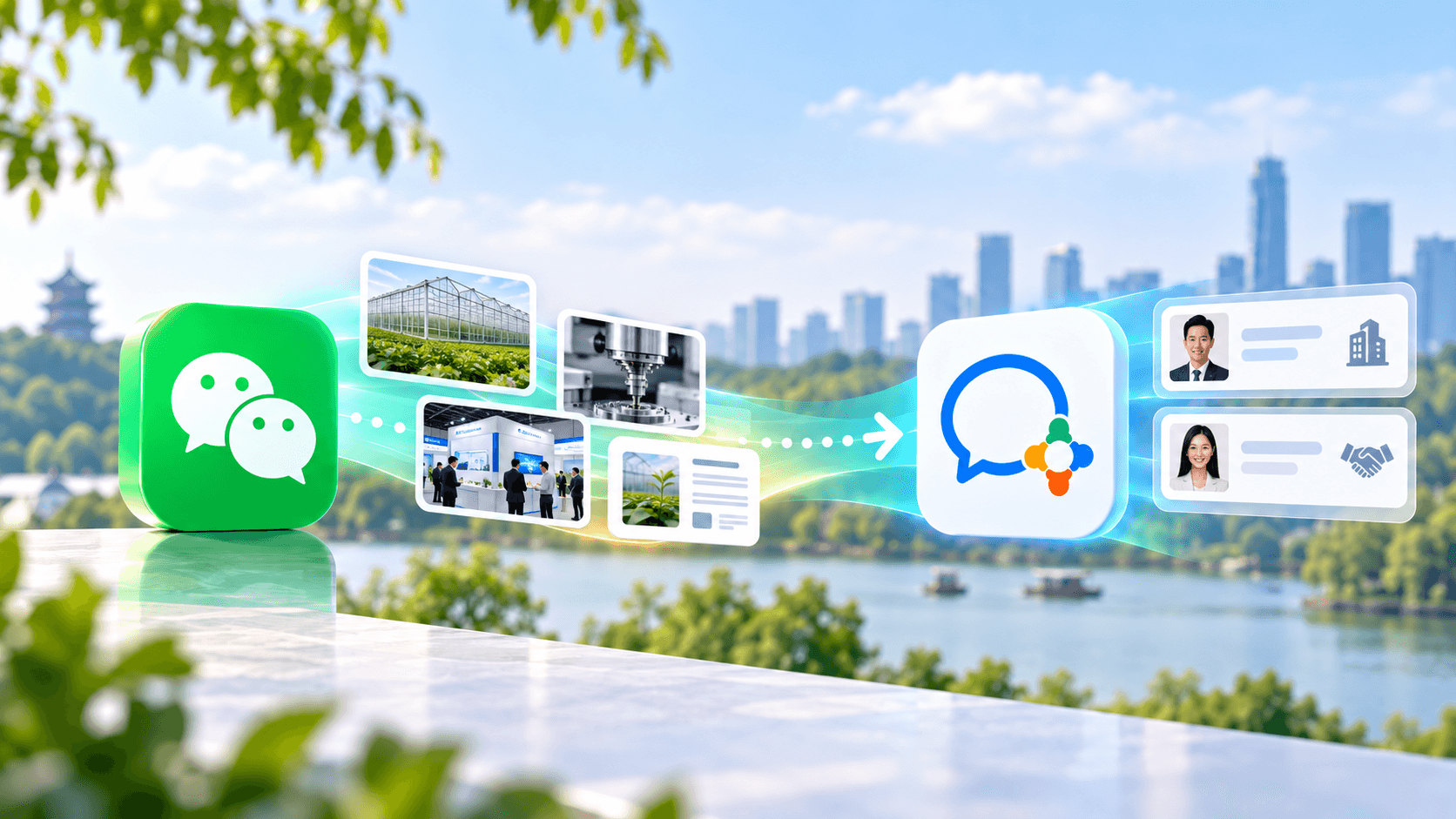
O2O, which stands for Online-to-Offline, is the framework Chinese companies use to connect their digital presence with physical events. Applied to a tradeshow, it means treating the exhibition as one touchpoint in a broader digital journey rather than a standalone activity. The approach involves three distinct phases: building awareness before the show, capturing leads during it, and sustaining engagement after it closes.
This guide walks through each phase in practical terms.
Phase 1: How to Build Your China Digital Presence Before the Tradeshow
The period between confirming your exhibition spot and the show's opening day is often used entirely for logistics. From a digital marketing perspective, it is also the window when Chinese buyers are actively building their shortlists.
Procurement managers and technical decision-makers in China typically research suppliers before arriving at a tradeshow. They use WeChat, Baidu, and Rednote rather than the show's official exhibitor directory. A company that does not appear in those channels during the pre-show period is less likely to be on a buyer's agenda when they walk the floor.
What to set up in the 4-6 weeks before a China tradeshow
WeChat Official Account posts: Two or three posts announcing your participation, stand number, and what you will be showcasing. Content should be written in Mandarin, as machine-translated copy is generally recognisable and affects how professional buyers perceive the brand.
WeChat or Douyin ads: Geo-targeted campaigns aimed at professionals in your sector, using the show's name as a keyword anchor. Reach does not need to be broad; relevance to the right audience segment matters more.
Baidu landing page or mini-site: A simple Mandarin page confirming your presence, your product range, and a QR code to connect via WeCom. This is useful for buyers who search for exhibitors by name or product category before they arrive.
Expert influencer: A proven-method, also for B2B, to reach a significant amount of relevant potential customers is to work with expert influencer(s) that have following in your industry. The expert influencer creates relevant content and posts this as a paid-for article or video (advertorial) on their channels. The content can directly be related to the exhibition, triggering additional interest and traffic to the offline booth.
The purpose of Phase 1 is not to replace the tradeshow conversation. It is to ensure that by the time a buyer reaches your stand, your company is already a recognisable name rather than a new introduction. For Kekkilä, a Finnish manufacturer of professional growing media, we ran exactly this kind of pre-event activation around IPM China, a leading horticulture trade fair connecting growers, suppliers, distributors, and technology providers in the Chinese market. Content distributed through WeChat and Chinese horticultural media in the weeks before the show meant that horticulture professionals were already familiar with the brand before they walked the floor.
Phase 2: How to Capture Leads on the China Tradeshow Floor
Phase 2 is where the O2O framework becomes most visible. The physical event functions as a conversion point for the digital channels set up in Phase 1.
The main structural difference between a standard tradeshow approach and an O2O one is how contact information is captured. Business cards remain common, but they create a manual process: data entry after the event, delayed follow-up, and no direct channel to the buyer. WeChat and WeCom connections, by contrast, create an immediate, persistent link that is ready for follow-up the same day.
How Chinese tradeshow lead capture works in practice
QR codes on the stand: Exhibitors typically place QR codes at multiple points on the stand, including backdrops, product displays, brochures, and demo screens. Scanning a code can direct a buyer to follow the company's WeChat Official Account or add a WeCom contact. Offering something in exchange, such as a digital catalogue or product specification sheet sent directly via WeChat, tends to increase scan rates.
Real-time content from the floor: Short video clips posted to WeChat or Douyin during the event serve a dual purpose. They provide social proof to buyers who have not yet visited the stand, and they contribute to growing the company's follower base while the show is still running. A 30-second product walkthrough or a brief clip of a live demonstration is sufficient.
WeCom for contact management: WeCom is the enterprise version of WeChat and functions as a CRM tool on the floor. Contacts added via WeCom can be tagged by product interest or buyer type at the point of connection, which simplifies post-show segmentation without requiring manual data entry.
Standard approach | O2O approach |
Business card exchange | WeCom connection with instant tagging |
Printed catalogue handed out | Digital catalogue sent via WeChat |
Follow-up email days later | WeChat message within hours |
Limited post-show visibility | Ongoing reach via WeChat Official Account |
The practical difference is that an O2O approach keeps the channel open after the event ends. Rather than relying on a buyer to recall a company from a three-day fair, the WeChat or WeCom connection provides a direct line for follow-up. In the Kekkilä campaign we managed at IPM China, QR codes placed on the stand and distributed on localised product cards directed visitors to Kekkilä's WeChat Official Account, converting brief booth conversations into persistent digital connections that could be followed up on the same day.
Phase 3: How to Follow Up After a China Tradeshow on Chinese Platforms
The period immediately after a tradeshow is often where follow-up slows down. Teams return to their regular workload, and the contacts made on the floor can take days or weeks to reach. In China's B2B environment, where buyer attention moves quickly, delayed follow-up tends to reduce conversion rates noticeably.
An O2O setup addresses this structurally. Because leads were captured via WeCom and WeChat during the event, follow-up can begin the same day, in the channel the buyer already uses.
A post-show follow-up timeline for Chinese platforms
Within 24 hours: A short, personalised WeChat message to each WeCom connection made at the show. Referencing something specific from the conversation, written in Mandarin, is more effective than a generic template.
Within the first week: A recap post on the WeChat Official Account covering what was showcased, with photos from the stand and links to relevant product pages or a contact form. Tagging the show's official account can extend reach.
Weeks 2-4: Two or three pieces of content shared with new followers, such as a technical article, a case study, or a short product video. The focus at this stage is relevance and consistency rather than direct sales messaging.
Month 2 onwards: WeCom contacts can be segmented by product interest and moved into more direct sales conversations based on engagement levels. Those not yet ready for a sales conversation remain in the content cycle.
In China's B2B context, trust between a supplier and a buyer typically develops over multiple touchpoints rather than a single interaction. The WeChat Official Account is the tool most commonly used to maintain that presence between events. In the Kekkilä campaign, we also developed and introduced a brand mascot specifically for the IPM activation. The mascot gave the brand a consistent visual identity across WeChat content, made technical horticultural topics more accessible, and strengthened recognition across ongoing communications. Having supported Kekkilä across four consecutive years at IPM China, this approach generated a growing base of identifiable prospects and extended the commercial value of the show well beyond the exhibition period.
The Bottom Line: Measuring the ROI of a China Tradeshow O2O Campaign
Foot traffic numbers are easy to report, but they do not reflect how many of those visitors moved further along the buying process. A more useful set of metrics for an O2O campaign looks at what happened digitally: how many WeChat or WeCom connections were made during the event, how many followed the Official Account, what the open and engagement rates were on post-show content, and how many contacts progressed to a sales conversation within 60 to 90 days.
The three-phase structure is designed to make these numbers trackable. Phase 1 generates baseline reach data. Phase 2 captures connections that can be attributed directly to the event. Phase 3 produces engagement data that indicates buyer intent over time.
If you are planning to exhibit at a China tradeshow, we can help you turn the event into a broader O2O campaign, building visibility before the show, supporting engagement during the event, and following up with prospects afterwards. Talk to our team about what this could look like for your sector.
O2O, which stands for Online-to-Offline, is the framework Chinese companies use to connect their digital presence with physical events. Applied to a tradeshow, it means treating the exhibition as one touchpoint in a broader digital journey rather than a standalone activity. The approach involves three distinct phases: building awareness before the show, capturing leads during it, and sustaining engagement after it closes.
This guide walks through each phase in practical terms.
Phase 1: How to Build Your China Digital Presence Before the Tradeshow
The period between confirming your exhibition spot and the show's opening day is often used entirely for logistics. From a digital marketing perspective, it is also the window when Chinese buyers are actively building their shortlists.
Procurement managers and technical decision-makers in China typically research suppliers before arriving at a tradeshow. They use WeChat, Baidu, and Rednote rather than the show's official exhibitor directory. A company that does not appear in those channels during the pre-show period is less likely to be on a buyer's agenda when they walk the floor.
What to set up in the 4-6 weeks before a China tradeshow
WeChat Official Account posts: Two or three posts announcing your participation, stand number, and what you will be showcasing. Content should be written in Mandarin, as machine-translated copy is generally recognisable and affects how professional buyers perceive the brand.
WeChat or Douyin ads: Geo-targeted campaigns aimed at professionals in your sector, using the show's name as a keyword anchor. Reach does not need to be broad; relevance to the right audience segment matters more.
Baidu landing page or mini-site: A simple Mandarin page confirming your presence, your product range, and a QR code to connect via WeCom. This is useful for buyers who search for exhibitors by name or product category before they arrive.
Expert influencer: A proven-method, also for B2B, to reach a significant amount of relevant potential customers is to work with expert influencer(s) that have following in your industry. The expert influencer creates relevant content and posts this as a paid-for article or video (advertorial) on their channels. The content can directly be related to the exhibition, triggering additional interest and traffic to the offline booth.
The purpose of Phase 1 is not to replace the tradeshow conversation. It is to ensure that by the time a buyer reaches your stand, your company is already a recognisable name rather than a new introduction. For Kekkilä, a Finnish manufacturer of professional growing media, we ran exactly this kind of pre-event activation around IPM China, a leading horticulture trade fair connecting growers, suppliers, distributors, and technology providers in the Chinese market. Content distributed through WeChat and Chinese horticultural media in the weeks before the show meant that horticulture professionals were already familiar with the brand before they walked the floor.
Phase 2: How to Capture Leads on the China Tradeshow Floor
Phase 2 is where the O2O framework becomes most visible. The physical event functions as a conversion point for the digital channels set up in Phase 1.
The main structural difference between a standard tradeshow approach and an O2O one is how contact information is captured. Business cards remain common, but they create a manual process: data entry after the event, delayed follow-up, and no direct channel to the buyer. WeChat and WeCom connections, by contrast, create an immediate, persistent link that is ready for follow-up the same day.
How Chinese tradeshow lead capture works in practice
QR codes on the stand: Exhibitors typically place QR codes at multiple points on the stand, including backdrops, product displays, brochures, and demo screens. Scanning a code can direct a buyer to follow the company's WeChat Official Account or add a WeCom contact. Offering something in exchange, such as a digital catalogue or product specification sheet sent directly via WeChat, tends to increase scan rates.
Real-time content from the floor: Short video clips posted to WeChat or Douyin during the event serve a dual purpose. They provide social proof to buyers who have not yet visited the stand, and they contribute to growing the company's follower base while the show is still running. A 30-second product walkthrough or a brief clip of a live demonstration is sufficient.
WeCom for contact management: WeCom is the enterprise version of WeChat and functions as a CRM tool on the floor. Contacts added via WeCom can be tagged by product interest or buyer type at the point of connection, which simplifies post-show segmentation without requiring manual data entry.
Standard approach | O2O approach |
Business card exchange | WeCom connection with instant tagging |
Printed catalogue handed out | Digital catalogue sent via WeChat |
Follow-up email days later | WeChat message within hours |
Limited post-show visibility | Ongoing reach via WeChat Official Account |
The practical difference is that an O2O approach keeps the channel open after the event ends. Rather than relying on a buyer to recall a company from a three-day fair, the WeChat or WeCom connection provides a direct line for follow-up. In the Kekkilä campaign we managed at IPM China, QR codes placed on the stand and distributed on localised product cards directed visitors to Kekkilä's WeChat Official Account, converting brief booth conversations into persistent digital connections that could be followed up on the same day.
Phase 3: How to Follow Up After a China Tradeshow on Chinese Platforms
The period immediately after a tradeshow is often where follow-up slows down. Teams return to their regular workload, and the contacts made on the floor can take days or weeks to reach. In China's B2B environment, where buyer attention moves quickly, delayed follow-up tends to reduce conversion rates noticeably.
An O2O setup addresses this structurally. Because leads were captured via WeCom and WeChat during the event, follow-up can begin the same day, in the channel the buyer already uses.
A post-show follow-up timeline for Chinese platforms
Within 24 hours: A short, personalised WeChat message to each WeCom connection made at the show. Referencing something specific from the conversation, written in Mandarin, is more effective than a generic template.
Within the first week: A recap post on the WeChat Official Account covering what was showcased, with photos from the stand and links to relevant product pages or a contact form. Tagging the show's official account can extend reach.
Weeks 2-4: Two or three pieces of content shared with new followers, such as a technical article, a case study, or a short product video. The focus at this stage is relevance and consistency rather than direct sales messaging.
Month 2 onwards: WeCom contacts can be segmented by product interest and moved into more direct sales conversations based on engagement levels. Those not yet ready for a sales conversation remain in the content cycle.
In China's B2B context, trust between a supplier and a buyer typically develops over multiple touchpoints rather than a single interaction. The WeChat Official Account is the tool most commonly used to maintain that presence between events. In the Kekkilä campaign, we also developed and introduced a brand mascot specifically for the IPM activation. The mascot gave the brand a consistent visual identity across WeChat content, made technical horticultural topics more accessible, and strengthened recognition across ongoing communications. Having supported Kekkilä across four consecutive years at IPM China, this approach generated a growing base of identifiable prospects and extended the commercial value of the show well beyond the exhibition period.
The Bottom Line: Measuring the ROI of a China Tradeshow O2O Campaign
Foot traffic numbers are easy to report, but they do not reflect how many of those visitors moved further along the buying process. A more useful set of metrics for an O2O campaign looks at what happened digitally: how many WeChat or WeCom connections were made during the event, how many followed the Official Account, what the open and engagement rates were on post-show content, and how many contacts progressed to a sales conversation within 60 to 90 days.
The three-phase structure is designed to make these numbers trackable. Phase 1 generates baseline reach data. Phase 2 captures connections that can be attributed directly to the event. Phase 3 produces engagement data that indicates buyer intent over time.
If you are planning to exhibit at a China tradeshow, we can help you turn the event into a broader O2O campaign, building visibility before the show, supporting engagement during the event, and following up with prospects afterwards. Talk to our team about what this could look like for your sector.